
The Quantum Computing Race: How to Invest
Full Ecosystem & My Basket

I’ve tracked quantum for a while but never fully enough to gain an edge relative to other themes I’m focused on. I never invested in the IONQ, RGTI, QBTS boom etc and I had no regret on that.
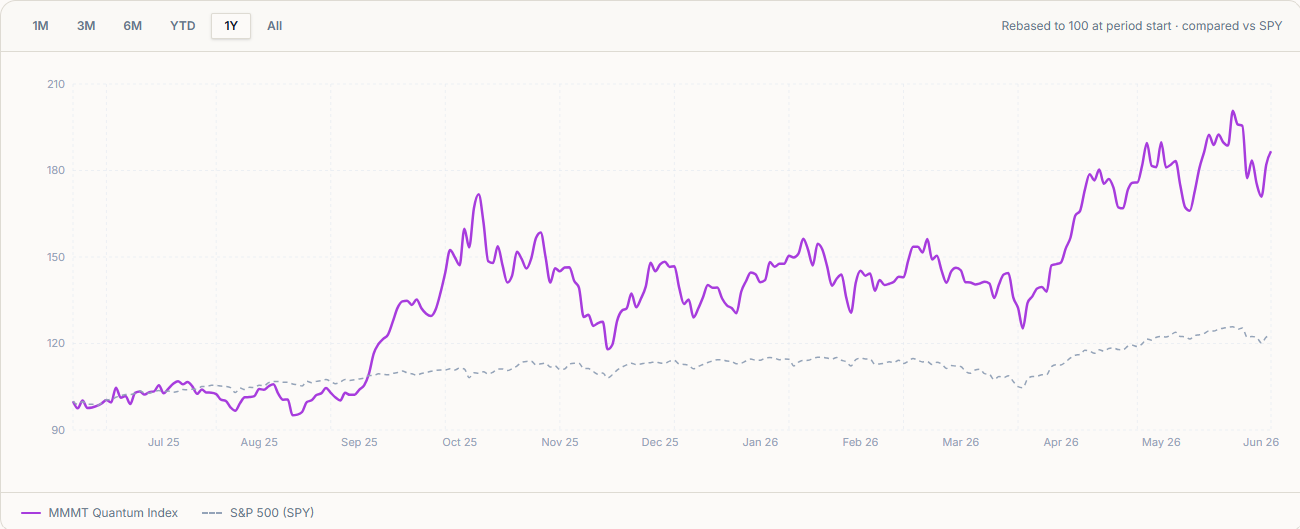
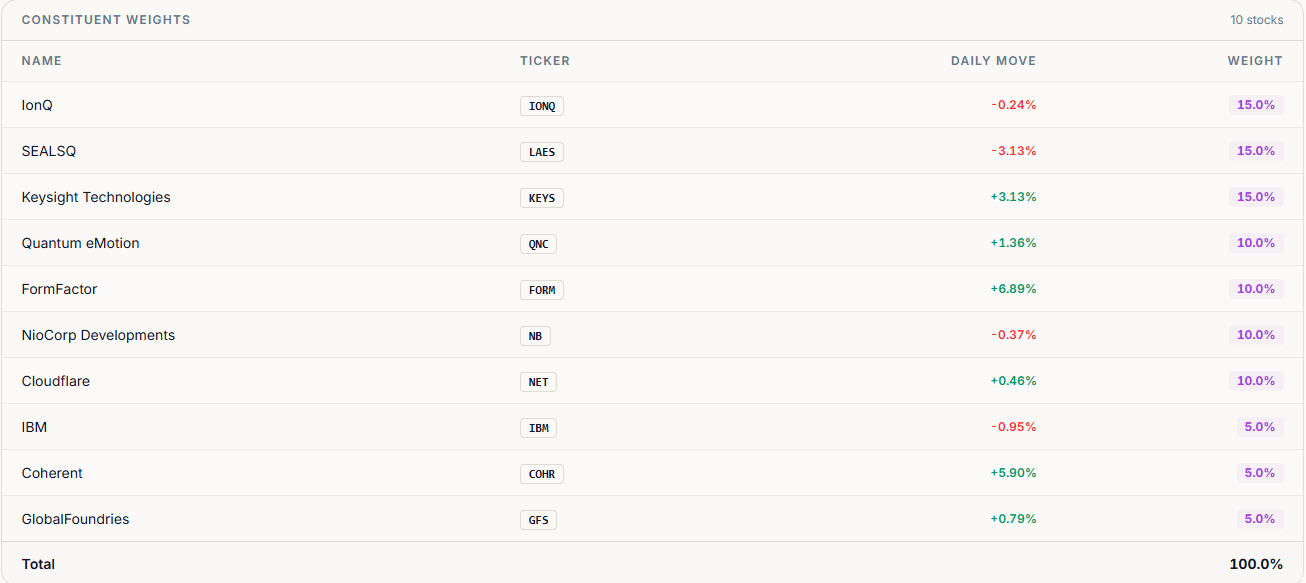
But the more time I’ve spent listening to those who know where quantum truly is gave me a pretty good push to get this article and quantum basket out. Here’s the basket performance (and constituents):
Sundar Pichai for example thinks quantum is where AI was 5 years ago.

Until more recently quantum has been a theoretical promise and nothing more but it’s now slowly entering a period of commercial utility. Most notably in materials science, chemistry, drug discovery, logistics, and in national security too.
A quick intro on quantum computing. I’ll keep this brief because there’s thousands of YouTube videos and articles out there explaining what quantum does and they’ll probably explain it better than I will.
My edge is in painting out the investing roadmap for you:
Quantum Computing
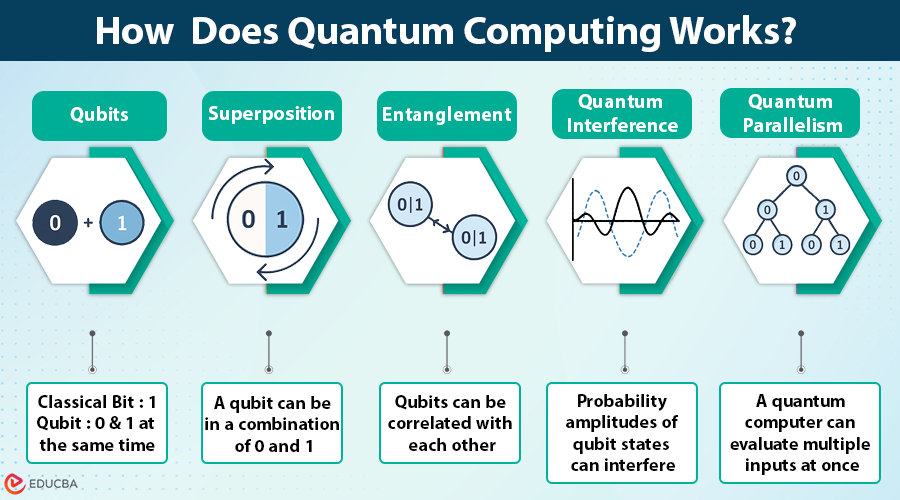
Quantum computers behave very differently to classical computers. Classical computers process information in “bits”. That’s a 1 or a 0. That’s it.
Quantum computers operate using quantum bits (qubits). This allows them to be in multiple states at once which leads to problem solving on a whole different level to classical computers.
My Focus
My focus is more on the technologies and bottlenecks involved in the quantum computing revolution. Just like with the AI revolution, we’ve seen breakthroughs in optics, lasers, 3D packaging etc…we’re going to see that same process play out for quantum. And this means a new wave of industrial development focused on cryogenic control chips, scalable quantum chip fabrication, precision lithography, and the interconnects needed to link it all together.
Looking at the TAM, McKinsey is currently estimating quantum computing could create $1.3 to $2.7 trillion in economic value by 2035. I take these estimates with a pinch of salt because the range of estimates I’m seeing is so broad and the timelines I’m seeing on when quantum becomes economically active is wide too.
But the big picture is there. Quantum has a big future. And it’s one to start learning about.
The US Department of Commerce is telling us exactly this as well. Just last week, nine letters of intent were signed to direct $2.0 billion through the CHIPS and Science Act to quantum companies for non-controlling equity in each company. These equity stakes were split nicely across a range of quantum architectures such as photonic, silicon-spin, trapped-ion, and superconducting.
Whether it’s worthy of an investment today is another question. Most quantum plays aren’t really breaking out technically just yet so dependent on how much those technicals mean to you could depend on when you consider initiating a position.
Here’s how I’d breakdown quantum (without looking at the pure plays like IONQ, RGTI, QUBT, and QBTS):
Critical Minerals
Cybersecurity
Lasers & Photonics
Superconducting Circuits
Cryogenic Test Equipment
Quantum Hardware
Quantum Chip Fabrication
Quantum Applications
Before we get into the ideas for the week, I just wanted to highlight the database I’m currently building which is currently in beta and is with paid subs now.
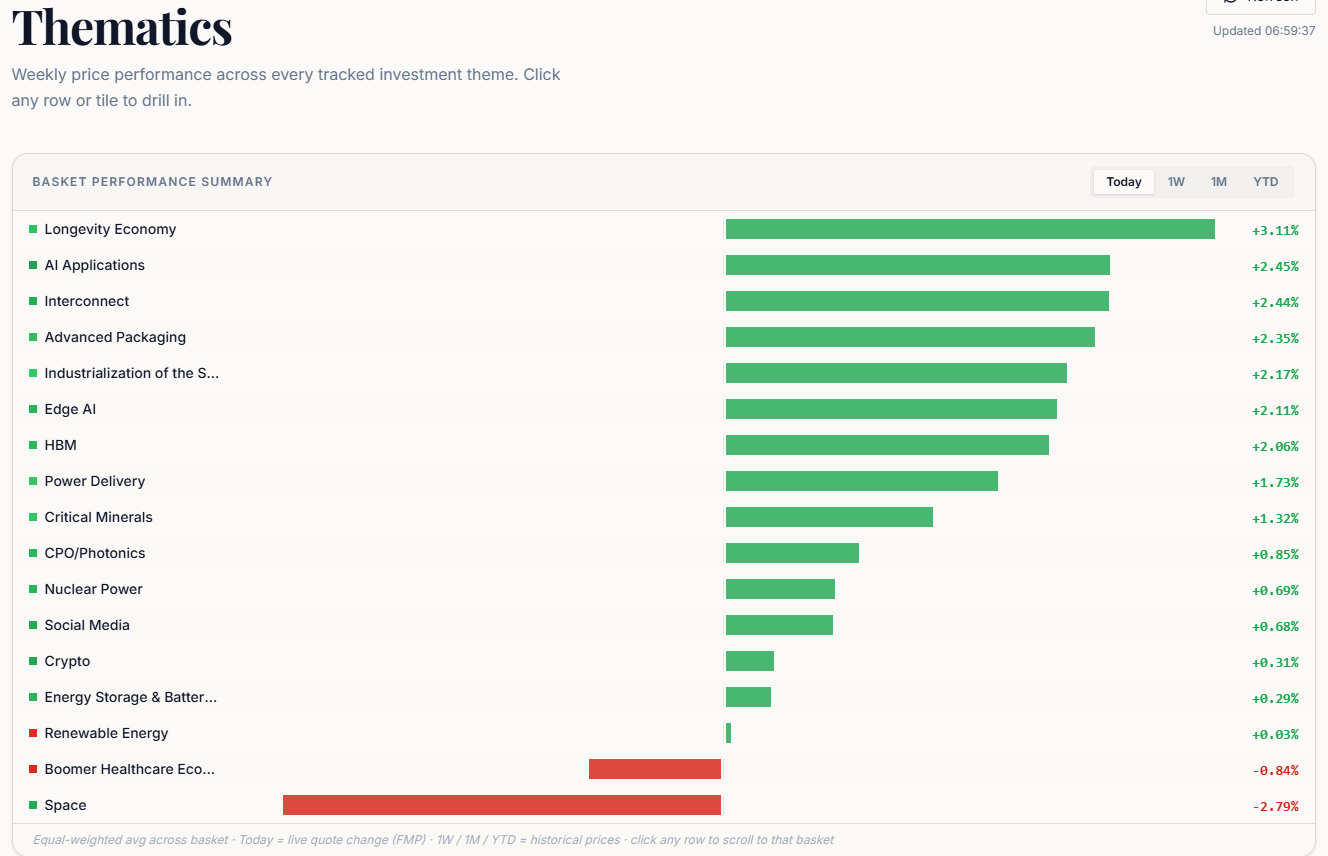
This is a fully functional web-app / database / research website all in one go. You also get:
Daily market commentary
My personal portfolio and watchlist
Weekly thematic commentary
New Ideas
Weekly Videos
All for just $24 a month (or $240 a year).
Critical Minerals: The Foundation
It depends on the quantum architecture used, but a range of critical minerals and rare earths are needed in quantum too. I’m already very bullish on rare earths over the next 5 year technological revolution, but add quantum on top of this which could be another tech revolution on its own, and the demand for rare earths over a 10+ year period is likely substantial relative to what it is today.
The key plays are niobium and nickel which are critical for superconducting quantum computers (more on this below). It’s one of the reasons we’ve seen Chinese firms take huge stakes in Brazilian niobium and nickel miners over the last decade.
Examples:
CMOC Group acquired full ownership of Anglo American’s niobium business.
CNMC (Chinese state owned) purchased Mineracao Taboca.
CITIC Group formed a consortium called China Niobium Investment Holdings.
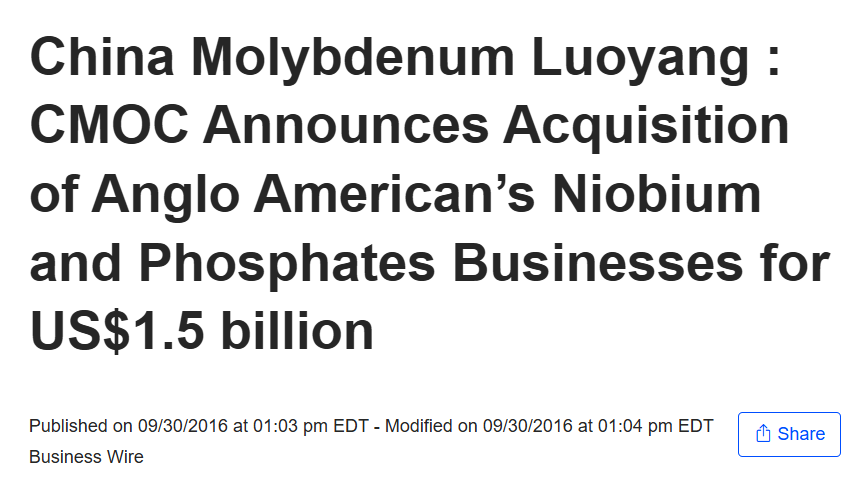
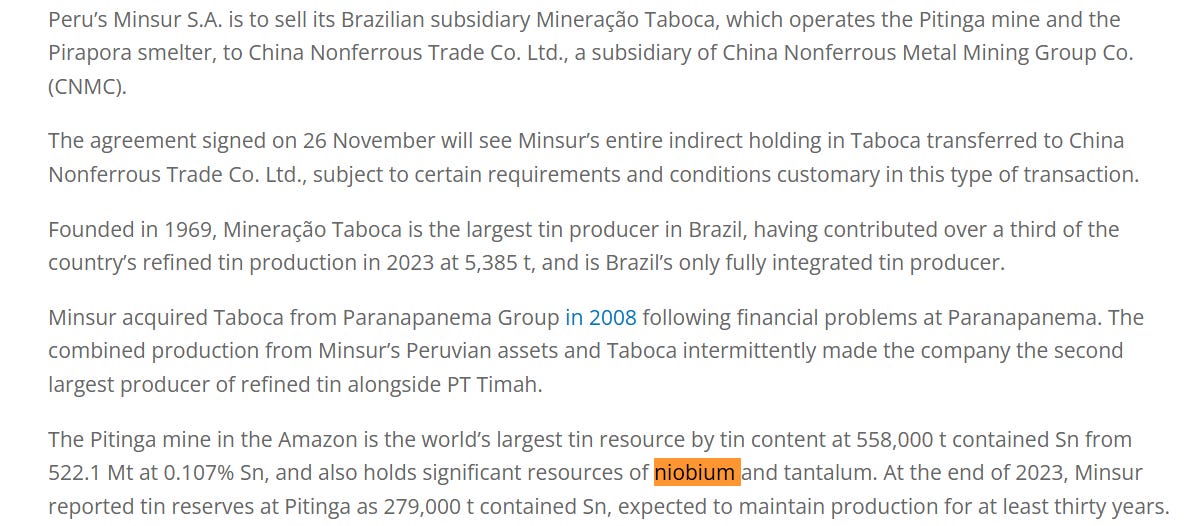
The U.S. currently is 100% import dependent on niobium with the vast majority of that coming from Brazil.
Niobium is used in superconducting qubits, capacitors, and resonators. It’s in the core architecture of IBM and Google style quantum computers. Importantly, the supply risk is quite severe with 85% of global production coming from a single mine in Brazil.
And then there’s nickel. Nickel is part of the mu-metal shielding process. Mu-metal magnetic shielding is the material used to stop any stray magnetic field. Nickel is by far the best metal for this job and probably makes it one of the most underappreciated metal going forward assuming quantum computing turns out like we expect it to.
Here’s the niobium playbook:
NioCorp Developments (NB): I wouldn’t personally overcomplicate it if you’re looking at pure niobium investments aside from NB. It’s developing the only niobium and scandium project in the US making it the most advanced niobium resource outside the US.
Personally, I’m invested in scandium through Sunrise Energy Metals (SRL.AX/SREMF) but I have no exposure to niobium right now. I suspect that’ll change at some point with a potential addition of NB to the portfolio. More than just being nice thematically, NB has a great balance sheet with 8+ years runway before $800M bank financing comes through.
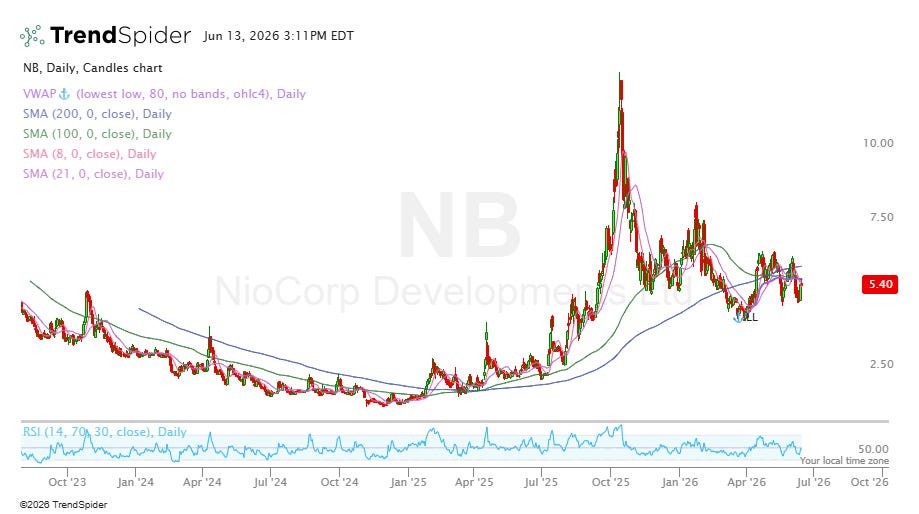
I’ve been using TrendSpider for all of my charting needs for a while now and honestly haven’t looked back - if you’re not already on it… worth checking out. You can sign up through my link above.

Forward P/S is only ~1.5x on implied $577 million in annual revenue confirmed from materials alone. I think this one is cheap and a great trade thematically for quantum and for other reasons too.
Here’s the nickel playbook:
I’ve tracked quantum for a while but never fully enough to gain an edge relative to other themes I’m focused on. I never invested in the IONQ, RGTI, QBTS boom etc and I had no regret on that.
But the more time I’ve spent listening to those who know where quantum truly is gave me a pretty good push to get this article and quantum basket out. Here’s the basket performance (and constituents):
Sundar Pichai for example thinks quantum is where AI was 5 years ago.
Until more recently quantum has been a theoretical promise and nothing more but it’s now slowly entering a period of commercial utility. Most notably in materials science, chemistry, drug discovery, logistics, and in national security too.
A quick intro on quantum computing. I’ll keep this brief because there’s thousands of YouTube videos and articles out there explaining what quantum does and they’ll probably explain it better than I will.
My edge is in painting out the investing roadmap for you:
Quantum Computing
Quantum computers behave very differently to classical computers. Classical computers process information in “bits”. That’s a 1 or a 0. That’s it.
Quantum computers operate using quantum bits (qubits). This allows them to be in multiple states at once which leads to problem solving on a whole different level to classical computers.
My Focus
My focus is more on the technologies and bottlenecks involved in the quantum computing revolution. Just like with the AI revolution, we’ve seen breakthroughs in optics, lasers, 3D packaging etc…we’re going to see that same process play out for quantum. And this means a new wave of industrial development focused on cryogenic control chips, scalable quantum chip fabrication, precision lithography, and the interconnects needed to link it all together.
Looking at the TAM, McKinsey is currently estimating quantum computing could create $1.3 to $2.7 trillion in economic value by 2035. I take these estimates with a pinch of salt because the range of estimates I’m seeing is so broad and the timelines I’m seeing on when quantum becomes economically active is wide too.
But the big picture is there. Quantum has a big future. And it’s one to start learning about.
The US Department of Commerce is telling us exactly this as well. Just last week, nine letters of intent were signed to direct $2.0 billion through the CHIPS and Science Act to quantum companies for non-controlling equity in each company. These equity stakes were split nicely across a range of quantum architectures such as photonic, silicon-spin, trapped-ion, and superconducting.
Whether it’s worthy of an investment today is another question. Most quantum plays aren’t really breaking out technically just yet so dependent on how much those technicals mean to you could depend on when you consider initiating a position.
Here’s how I’d breakdown quantum (without looking at the pure plays like IONQ, RGTI, QUBT, and QBTS):
Critical Minerals
Cybersecurity
Lasers & Photonics
Superconducting Circuits
Cryogenic Test Equipment
Quantum Hardware
Quantum Chip Fabrication
Quantum Applications
Before we get into the ideas for the week, I just wanted to highlight the database I’m currently building which is currently in beta and is with paid subs now.
This is a fully functional web-app / database / research website all in one go. You also get:
Daily market commentary
My personal portfolio and watchlist
Weekly thematic commentary
New Ideas
Weekly Videos
All for just $24 a month (or $240 a year).
Critical Minerals: The Foundation
It depends on the quantum architecture used, but a range of critical minerals and rare earths are needed in quantum too. I’m already very bullish on rare earths over the next 5 year technological revolution, but add quantum on top of this which could be another tech revolution on its own, and the demand for rare earths over a 10+ year period is likely substantial relative to what it is today.
The key plays are niobium and nickel which are critical for superconducting quantum computers (more on this below). It’s one of the reasons we’ve seen Chinese firms take huge stakes in Brazilian niobium and nickel miners over the last decade.
Examples:
CMOC Group acquired full ownership of Anglo American’s niobium business.
CNMC (Chinese state owned) purchased Mineracao Taboca.
CITIC Group formed a consortium called China Niobium Investment Holdings.
The U.S. currently is 100% import dependent on niobium with the vast majority of that coming from Brazil.
Niobium is used in superconducting qubits, capacitors, and resonators. It’s in the core architecture of IBM and Google style quantum computers. Importantly, the supply risk is quite severe with 85% of global production coming from a single mine in Brazil.
And then there’s nickel. Nickel is part of the mu-metal shielding process. Mu-metal magnetic shielding is the material used to stop any stray magnetic field. Nickel is by far the best metal for this job and probably makes it one of the most underappreciated metal going forward assuming quantum computing turns out like we expect it to.
Here’s the niobium playbook:
NioCorp Developments (NB): I wouldn’t personally overcomplicate it if you’re looking at pure niobium investments aside from NB. It’s developing the only niobium and scandium project in the US making it the most advanced niobium resource outside the US.
Personally, I’m invested in scandium through Sunrise Energy Metals (SRL.AX/SREMF) but I have no exposure to niobium right now. I suspect that’ll change at some point with a potential addition of NB to the portfolio. More than just being nice thematically, NB has a great balance sheet with 8+ years runway before $800M bank financing comes through.
I’ve been using TrendSpider for all of my charting needs for a while now and honestly haven’t looked back - if you’re not already on it… worth checking out. You can sign up through my link above.
Forward P/S is only ~1.5x on implied $577 million in annual revenue confirmed from materials alone. I think this one is cheap and a great trade thematically for quantum and for other reasons too.
Here’s the nickel playbook:
Talon Metals (TLOFF): TLOFF/TLO is a pure play on nickel with Eagle Mine and Humboldt Mill in Michigan being the only primary nickel mine in the US.
It’s definitely a higher risk bet with limited revenue but if you’re bullish copper and nickel, have a look at it. I’m in a few pre-revenue generating miners so it’s not one I’d personally buy.
Glencore (GLEN): GLEN is primarily a copper supplier but it’s got some nickel exposure too. It wouldn’t be my primary nickel play but it’s a safer bet than TLOFF.
Other important metals and critical minerals are:
Helium: Essential for dilution refrigerators that cool quantum computers to millikelvin levels.
Indium: Used in bump bonds between wafers (Google’s approach), chipset connectors, and some photonic components.
Tantalum: Used in superconductors and resonators.
Gallium & Germanium: Critical for quantum photonics and semiconductor substrates.
Tungsten: Tungsten silicide is one of the leading materials for superconducting nanowire single-photon detectors (SNSPDs).
Here’s the Helium playbook:
ASP Isotopes (ASPI): Quantum computers need helium-3 or helium-4. ASPI produces helium-4 which is used to cool quantum computers near to absolute zero. It also does isotope enrichment which is the technology pathway as part of helium-3 production. This makes them the only listed company (that I’m aware of) that can supply helium-3 at scale.
Here’s the Indium playbook:
AXT Industries (AXTI): AXTI has been an incredible play on InP and photonics so far. Calling it a play on quantum today would be naive but as I’m trying to get across in this article, the photonics market is still in the early innings. Plays like AXTI will continue to be huge in AI, and likely huge in the quantum revolution too.
Nippon Chemical Industrial (4092): This is a pure play on red phosphorous which is needed for indium phosphide (InP). Nippon holds ~27% share of global production of this material acting as a supplier to companies like AXTI. InP substrates are ultimately the foundation of lasers and photonics which is relevant mainly today for the AI boom, but will be relevant in quantum too.
I wouldn’t overcomplicate the indium supply chain with more than those. AXTI I’d be cautious about buying today… but Nippon I think has great potential.
Here’s the Gallium & Germanium playbook:
Blue Moon Metals (BMM): BMM is a gallium miner operating at a mine in Utah with TECK as a 8% shareholder. It’s the most direct US- domiciled gallium mining play.
5N Plus (VNP): VNP is a gallium refiner and processor. It still sources gallium from China, Germany, and Russia but then purifies it and sells on to semiconductor and electronics customers globally.
So, BMM is a higher risk bet on a mine that doesn’t produce yet and VNP is the refinery that turns raw gallium into ultra-pure semiconductor grade material.
Umicore (UMI): Management have flagged germanium as the clear growth area going forward.
Here’s the Tungsten playbook:
Minsud Resources (MSR): It’s the largest manufacturer of tungsten outside China going through a turnaround now.
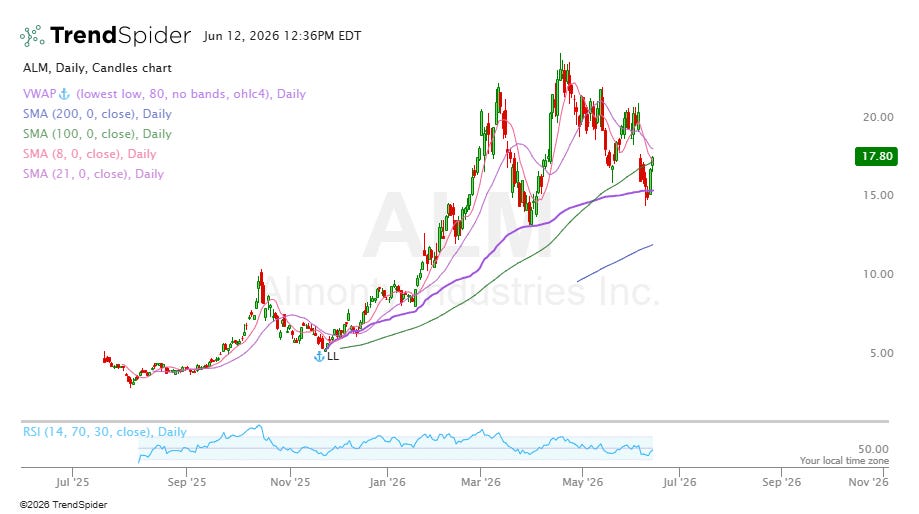
Almonty Industries (ALM): This is probably the most important Western tungsten producer out there. It completed Phase 1 commissioning at its Sandong mine earlier this year with Phase 2 expansion estimated for 2027 which would double output from there.
The good part for tungsten plays like this is that even forgetting about quantum, I’d be very bullish.
Cybersecurity
To me, this is probably the cleanest and most obvious way to play the quantum race.
Bain & Co recently said that ~90% of organizations have no defences against quantum threats even though ~70% expect quantum enabled attacks within the next 5 years.
It’s probably the biggest disconnect in the corporate world right now. Between what leaders are anticipating is going to happen and what they’re actually doing today to prevent it.
When you’ve got estimates (from Google) suggesting that cryptography protecting Bitcoin and Ethereum could be broken by a quantum machine with fewer than 500,000 qubits… imagine the cybersecurity threats to some of the largest enterprises in the world.
Simply put, the original “Q-day” deadline of +15-20 years from now seems slightly off. Whether it’s within 3 years, 5 years, or less than 10 years, the capital that is going to flow into the right cyber plays will be substantial.
Think about it:
Today, the focus is mainly on data protection/encrypting sensitive information against interception. Ultimately, that could become the much lesser focus.
Data leakage is serious but broken authentication is far more material as it undermines the integrity of everything. And take it a step further… the distinction becomes especially urgent as agentic AI systems proliferate. The amount of actions (financial transactions, access grants, infrastructure changes) that will happen in the agentic era with minimal human checkpoints is going to be huge. The security model that is assumed to hold all of that together right now is cryptographic identity.
When you take away that cryptographic identity layer, it threatens the entire believability of every authenticated instruction in an automated system. The attack surface feels almost infinite compared to today and that’s why I think cyber is the key play.
The timeline is of course unknown. “Q-day” could be 5+ years away and therefore it’s an opportunity cost question you have to ask yourself today, but if you have a long timeline I think the stocks below are one’s to consider building into at some point.
How to Invest:
QuantumCTek (688027): This is China’s dominant quantum-secure communications network. A powerful enough quantum computer could, in theory, break the encryption that protects pretty much everything online (banking, messaging, government, communications etc).
QuantumCTek is one of the few companies that is defending this via a process called Quantum Key Distribution.
Cloudflare (NET): NET has been quite vocal on quantum relative to other cybersecurity plays. In February, they became the first SASE platform to deliver post-quantum encryption across their full network stack.
And then in April, they revised their quantum roadmap to 2029 discussing how authentication (cryptographic layer that verifies identity and underpins trusted instruction across the internet as explained above) is the difficult and urgent task right now.
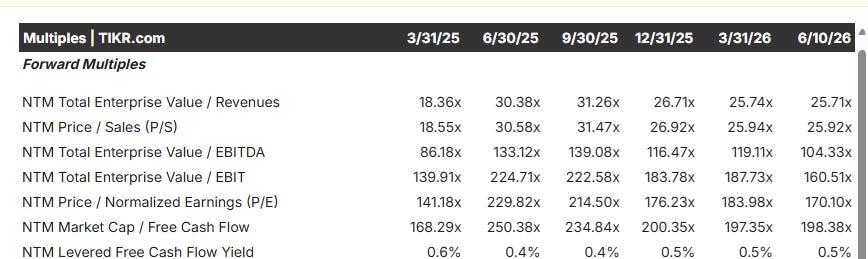
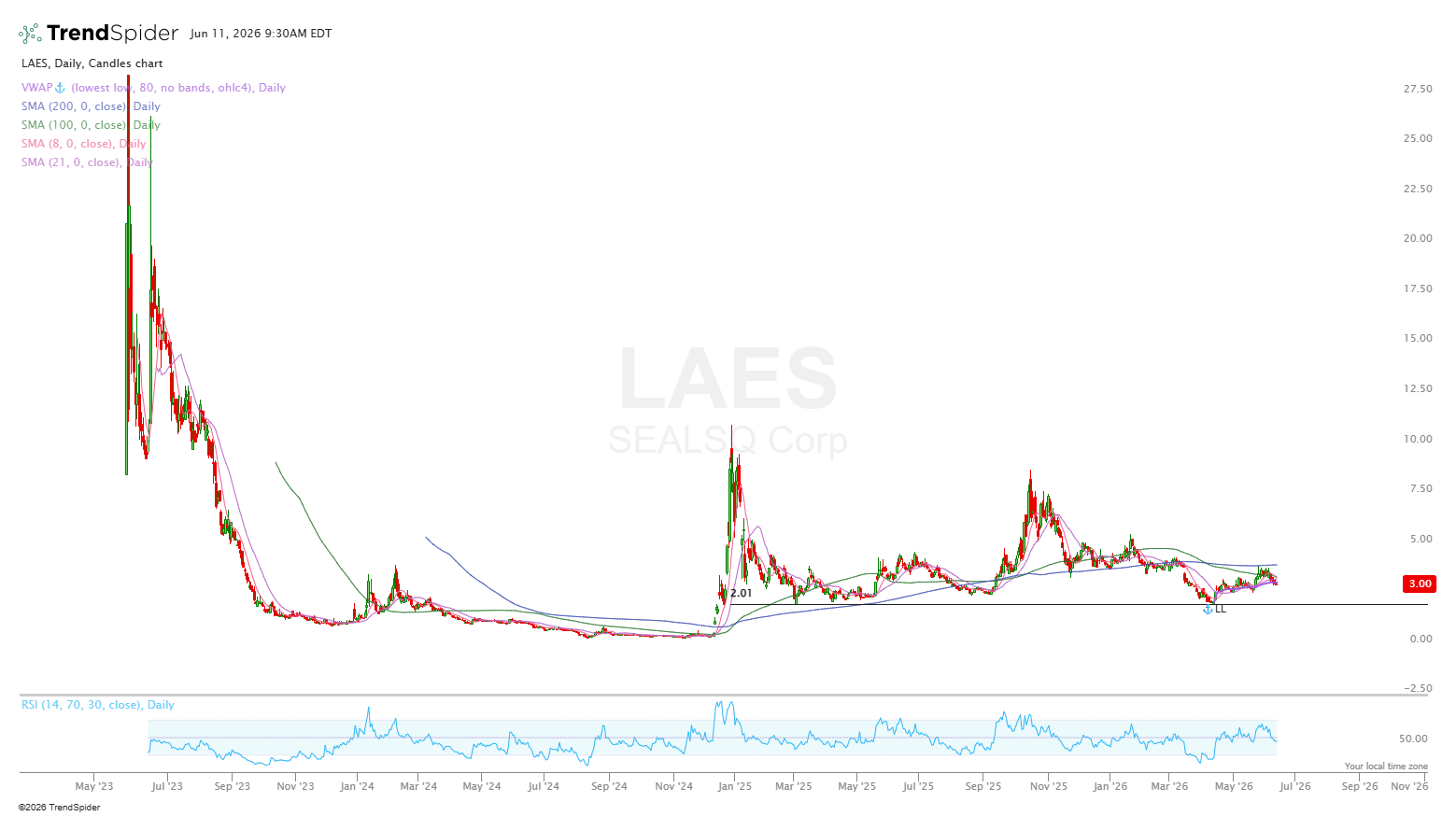
SealsQ (LAES): This is probably my favorite name in this basket based on upside potential though of course far riskier than the likes of NET. I’ll have a deep dive on LAES out shortly.
A quick note now though: LAES designs and manufactures semiconductor chips that are quantum resistant. They have first mover advantage in certified hardware native post-quantum cryptography at pretty much exactly the moment regulators are forcing the market to adopt it.
Quantum eMotion (QNC): QNC is a quantum cybersecurity pure play. It has an electron-based Quantum Random Number Generator with produces true quantum randomness. Every encryption system needs a source of randomness to generate its secret keys. The problem is that most devices generate randomness using software which means it can be more predictable and ultimately can be cracked. QNC answer is a hardware chip that generates randomness through quantum physics… meaning the keys it produces cannot be reversed-engineered or predicted even by a quantum computer.
Very very early stage, like LAES, but operating in quite an interesting niche of quantum.
Laser & Photonics
There are five main types of quantum computers:
Superconducting
Photonic
Trapped Ion
Neutral Atoms
Spin Qubits
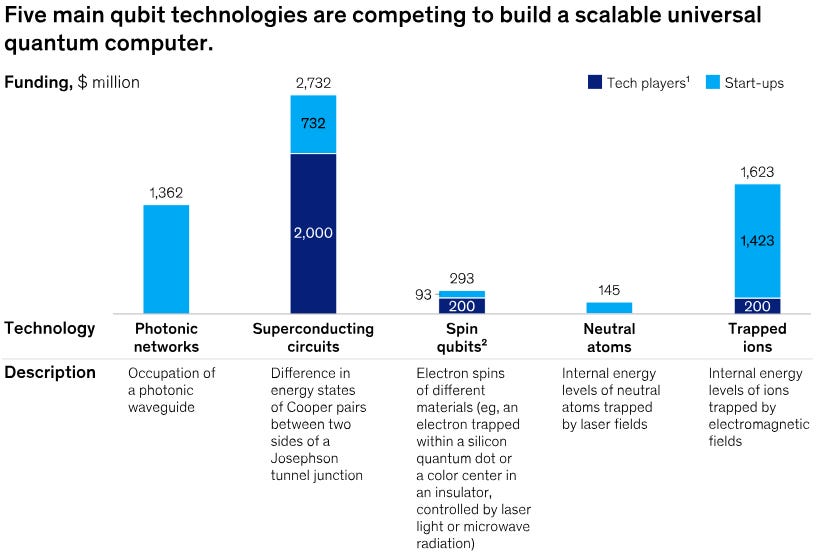
Lasers and photonics probably remain some of the most interesting parts of the market right now. In quantum specifically, you have:
Photonics as the qubits. I.e. the entire computation happens in light.
As the control mechanism for other qubit types. In trapped ions for example, ions are manipulated using laser pulses. Laser precision is a huge part of technology moving forward.
As quantum networking. Photons are the only practical carrier of quantum information over distance. Everything will essentially be built on photonic infrastructure.
How to Invest:
The two pure plays on photonic quantum computing are (both high risk):
Xanadu (XNDU): Canadian company building photonic quantum computers using squeezed light states and continuous-variable qubits.
Quantum Computing (QUBT): Developing thin-film lithium niobate (TFLN) photonic chips with applications in quantum computing, LiDAR, and sensing.
Or look at the potential picks and shovels:
Coherent (COHR): Partnered with Quside in January 2026 to demonstrate mass-manufacturable entropy source. Beyond that direct quantum partnership, COHR have lasers and photonics components which will be used in quantum labs more broadly.
Lumentum (LITE): Remains the owner of some of the most critical manufacturing IP in photonics. It’s tough to be bearish on LITE (and COHR) even without looking at the longer term quantum edge as well…but LITE are essentially building the manufacturing scale, process refinement, and all capabilities that photonic quantum hardware will need.
Superconducting Circuits
This one is slightly less interesting from an an investing standpoint in my opinion so I’ll keep this brief because this is ultimately an investing edge article and not a quantum research paper.
Superconducting circuits are the most mature and heavily funded approach to quantum. It’s the architecture Google and IBM used. The basic principle is that certain metals, when cooled to temperatures approaching absolute zero…lose all electrical resistance and exhibit quantum mechanical behavior.
Qubits are built from tiny superconducting circuits that allow them to exist in multiple states simultaneously. They’re the fastest of any qubit type which is why this approach has attracted most of the investment. The trade off here is fragility. These systems must be cooled to temperatures colder than space which is extremely challenging and expensive.
How to Invest:
IBM (IBM): IBM is one of the leaders in superconducting quantum computing using superconducting circuits with Josephson junctions cooled to near absolute zero.
IBM offers cloud access to its quantum hardware and emphasizes a path towards fault-tolerant quantum computing by the early 2030s with partnerships mainly in finance, chemistry, and materials science.
Google (GOOGL): GOOGL also uses superconducting qubits. Their Sycamore processor demonstrated early “quantum supremacy” claims.
Applied Materials (AMAT): AMAT isn’t a pure quantum play at all but it supplies critical semiconductor manufacturing equipment used to fabricate superconducting qubit chips. A nice beneficiary of the quantum era.
Cryogenic Test Equipment
This is another niche of quantum I find quite interesting.
And I think it’s testament to what we’ve seen in the AI buildout so far. Building a quantum computer is only half the problem. Before any superconducting qubit can be deployed, every chip must be tested at temperatures approaching absolute zero.
Think of Aehr Test Systems (AEHR) this year. It’s been the play on chip testing.
As the quantum hardware industry scales from dozens of qubits to thousands of qubits, the bottleneck could increasingly become the ability to test the qubit itself quickly and cost-effectively rather than manufacture the qubit itself.
This makes it the unglamourous but essential infrastructure that determines how fast the entire industry can move.
How to Invest:
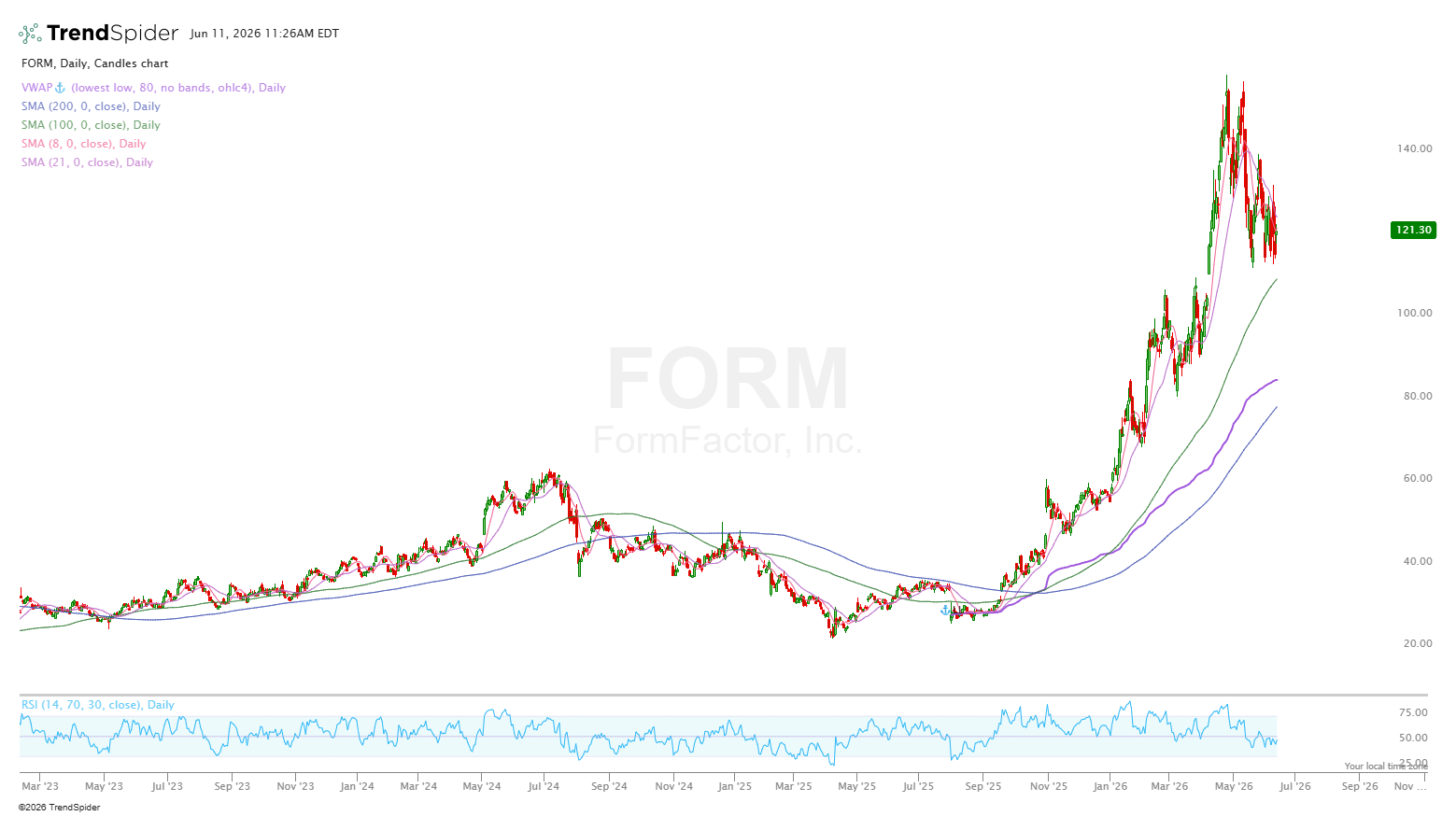
FormFactor (FORM): FORM is my pick here. It’s:
A business with strong revenues already from semiconductor testing. I.e. it doesn’t need quantum to be a great company.
A stock trading at an ok valuation. It trades at 33x EBITDA and 46x NTM PE (whilst growing EPS at ~45% CAGR through to 2028). So it trades ~1x PEG probably putting it fairly valued today. It’s therefore in the basket of potentially an extremely good company long term but one where it’s not undervalued today. Sometimes they end up being the best investments.
A business with a full suite of cryogenic products including sub-10 millikelvin refrigerators, sub-100 millikelvin cryostats, and cryogenic chip scale and wafer scale probers. In other words, it’s the most complete test infrastructure stack for superconducting quantum hardware today.
A couple bullish notes from FORM’s recent investor day in May 2026 (no mention of quantum):
“2026 is an inflection year when co-packaged optic is moving from design and niche production into high-volume manufacturing. You can’t get on this train right now. We had to be on this train a decade ago.”
“We’re going to double our revenues by 2030. We’re going to drive more than double EPS in that same time frame.”
That is the underlying business before even adding on the quantum potential 5+ years out.
Quantum Hardware
The quantum process is one of the most technically challenging processes in technology. Think ASML level of complexity.
It’s because qubits are extremely fragile. They exist in quantum state for milliseconds before the outside world destroys them. It’s why you need to send it in precisely timed microwave pulses, coordinated across thousands of channels, with no mistake in reading the results, with no timing error.
The solution is essentially signals at microwave frequencies, at temperatures close to absolute zero, with timing precision in nanoseconds. And that’s just for 1 qubit. Most quantum computers have 1,000+ qubits that need to be controlled simultaneously.
The control layer is managed currently by one main company.
How to Invest:
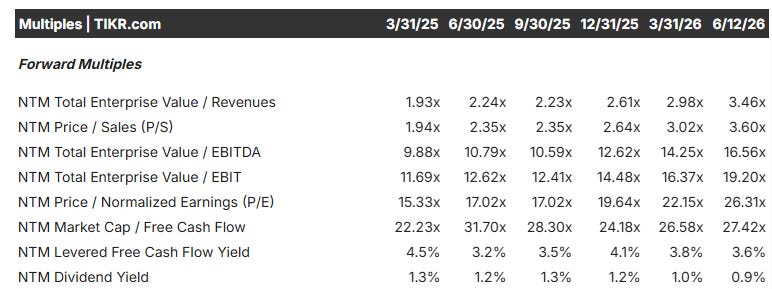
Keysight (KEYS): KEYS is the most credible pick in the entire quantum ecosystem today. It’s already produced the first commercial quantum control system that can control ~1,000 superconducting qubits. This is commercial already with Japan’s National Institute of Advanced Industrial Science and Technology.
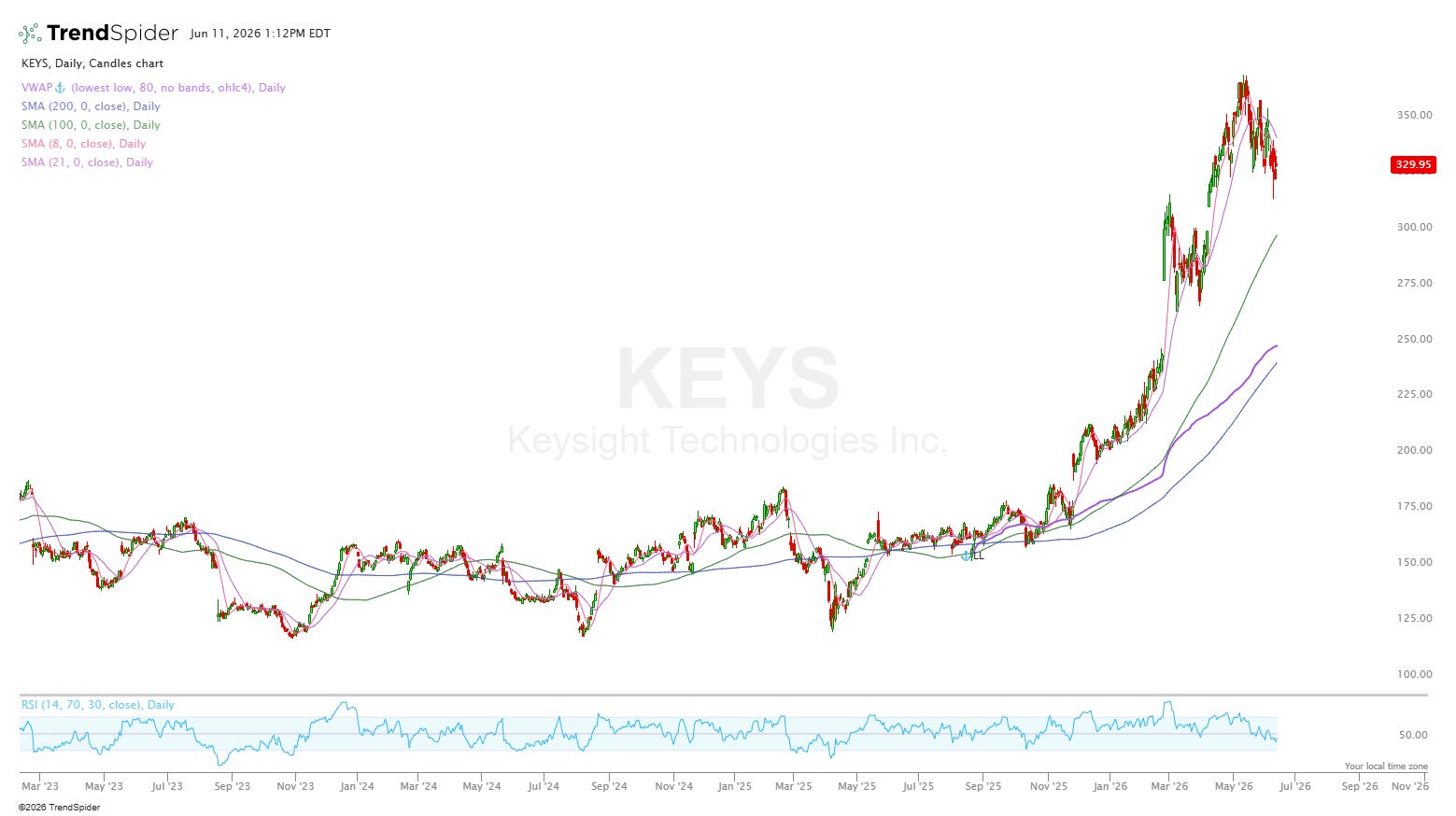
“Control systems serve a vital role in quantum computing, acting as the bidirectional bridge between the classical and quantum worlds.” - GM of Quantum Engineering Solutions at KEYS.
On top of the quantum hardware layer, KEYS has quantum EDA and simulation software launched as recently as October 2025. It’s just like the CDNS and SNPS for classical semiconductors but it’s in the quantum stack.
All around, it’s building a very underrated quantum segment and could be one of the key long term beneficiaries should quantum turn out like we expect it to.
Quantum Chip Fabrication
This is the simplest one to understand from an investing angle. It’s just the players who manufacture the chips it runs on.
Superconducting qubits, single photon detectors etc… all require precisely controlled deposition and etching processes at the atomic scale. It’s the foundation layer of every qubit architecture being developed today.
I think the natural question here is whether this turns into a commoditized business and ultimately whether it’s the best investing angle to look at quantum from. I’d probably say it’s not based on the conviction I have in the other sub-niches above.
Foundry economics are quite difficult. And quantum hardware may also evolve in direction that reduce fab complexity rather than increase it… i.e. with photonic and neutral atom approaches for example. Those approaches don’t require the same materials and fab complexity than with superconducting. And plus, the likes of Lam Research (LRCX), Applied Materials (AMAT) etc are all perfectly capable of moving into quantum fabrication if/when they deem it to be a strategically good move (of which many of them clearly aren’t right now as far as we’re aware).
I can make the argument the other way here as well but it’s one where I think the outcome is a bit more unknown. It makes this sub-niche of quantum the one I’d probably be more than happy to sit on the sidelines for.
Not every sub-niche needs to be invested in for you to do well in quantum.
How to Invest:
GlobalFoundries (GFS): GFS is a leading semiconductor manufacturer that’s also building a quantum foundry designed to support different qubit technologies. It’s already got huge scale, so it makes sense to be the go to partner for many quantum companies who may be looking to scale up production down the road.
Oxford Instruments (OXIG): OXIG is a UK based scientific instruments company that makes essential equipment for quantum hardware. It produces the dilution refrigerators that cool quantum chips down to near absolute zero, as well as precision tools for atomic level fabrication, such as etching and deposition systems.
It’s a very underrated quantum name today and one I’d happily include in a quantum specific basket of a few stocks.
It is worth noting that they recently sold off its NanoScience (which included a large portion of its Quantum business) for £42 million to focus in the short term on its semiconductor opportunity. My two cents is that it’s just a strategic timing issue because they still hold the potential to be big players in the quantum world.
Industries That’ll Benefit the Most from Quantum
This next section isn’t a discussion on pure quantum plays or even indirect beneficiaries like the critical materials section for example.
But it’s a discussion on ultimately where the money will accrue when quantum becomes a lot more economically viable. It’s the equivalent of how I see Lemonade (LMND) in insurance being a direct beneficiary of AI, or Tempus AI (TEM) in the diagnostics sector.
McKinsey has estimated that there are four industries that will be the biggest (and earliest) beneficiaries of quantum computing with economic impact being up to ~$2 trillion by 2035. Those sectors are chemicals, life sciences, finance, and mobility.
The biggest opportunity by far that I see is in life sciences/pharma. It’s why I’ve recently just put Eli Lilly (LLY) high on my watchlist (not necessarily because of quantum but because the potential for AI in the next 5 years to completely disrupt the drug discovery timeline and cut R&D costs. I’m not suggesting a company like LLY will be a beneficiary of quantum in the next 5 years, but I think the industry in general has what I deem to be the biggest innovation potential from today.
The higher risk, higher reward plays on this is smaller biotech plays like AbCellera (ABCL) but the immediate momentum for these plays is going to come from AI.
Long term, I believe the change we’re going to see in biotech with AI and then with quantum is going to be something that few can actually comprehend today.