

Still nothing has changed for me.
I still remain cautiously bullish on AI infrastructure and crypto (if your time frame is longer than a few months) though I appreciate there’s a lot of moving parts that makes buyers a little apprehensive.
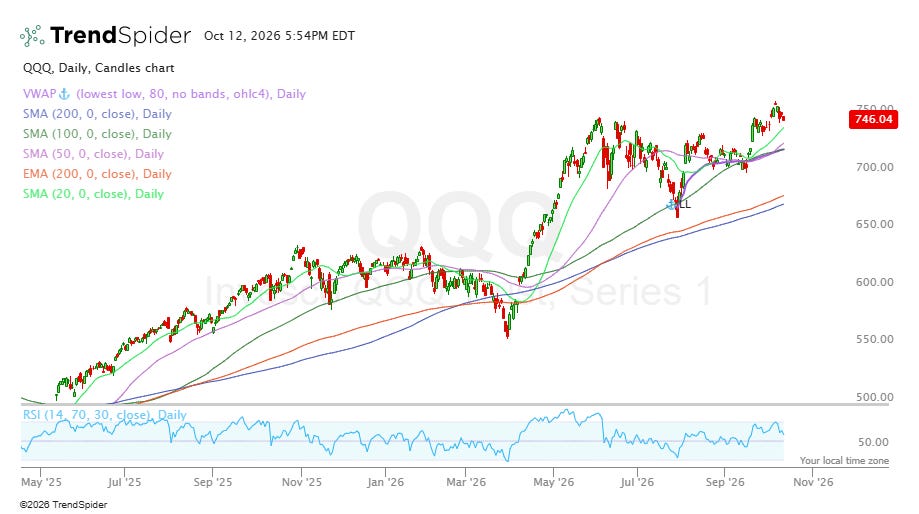
We remain in this challenging position between oil rising (+2% today), midterm politics, 10 year yields, Korean markets, AI infrastructure demand, AI infrastructure economics and bubble fears (very overblown), and much more. Each of these is a legitimate input. And together it’s creating one of the noisiest short-term environments many investors have experienced.
It’s led to a market that seems like it’s lacking buyers (yesterday saw the lowest volume since 2003) to drive any material bullish price action…hence why we’re just in this period of constant rotation in and out of sectors, and constant chop.
I would have expected we’d be seeing more institutional buying here or more bullish reiterations. Instead, the signals remain mixed.
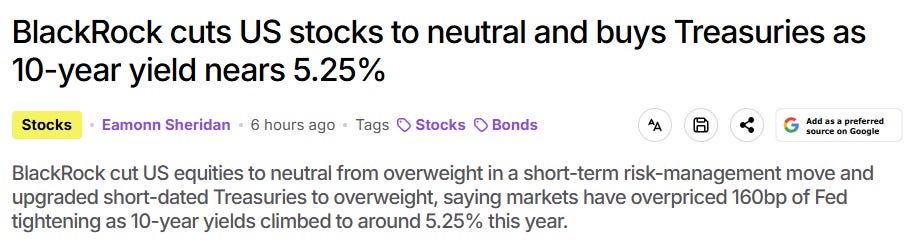
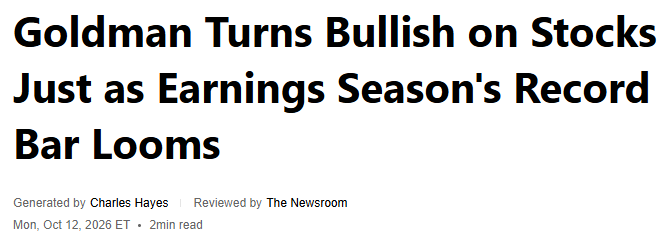
Yesterday alone, we had BlackRock downgrade their take on US equities and Goldman turn bullish on stocks.
Are We In A Bubble?
Short answer: No.
Longer answer: Calling a rising market a bubble is the easiest / laziest call in investing. It requires no analysis and eventually every bear will be claim to be right about something…even after missing out on hundreds of percent gains.
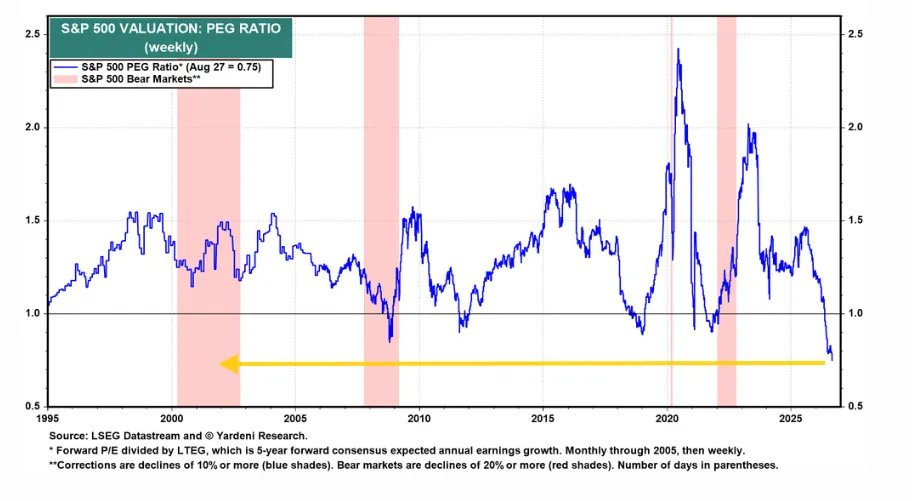
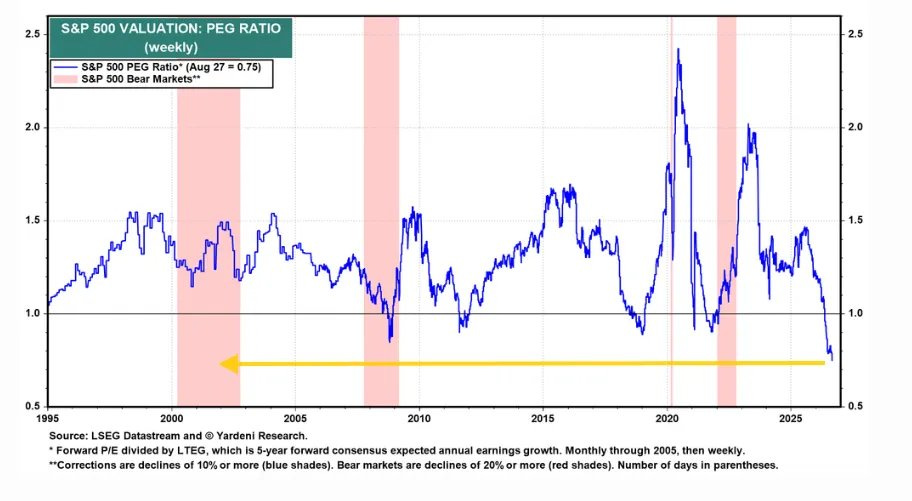
In the dot-com bubble we had companies like CSCO trade at 100x earnings and companies with $0 in revenue worth billions. Today’s market is completely the opposite - we have earnings growing faster than prices so multiples are compressing and PEG’s at 30 year lows. It’s a market centered around macro fear, fear of future financing, and future payback vs how good the technology is…rather than a “bubble.”
There’s a good reason for this compression though. AI makes it cheaper to build competitors so moats are much weaker than they were a decade ago meaning a company’s sustainable profits may be much less.
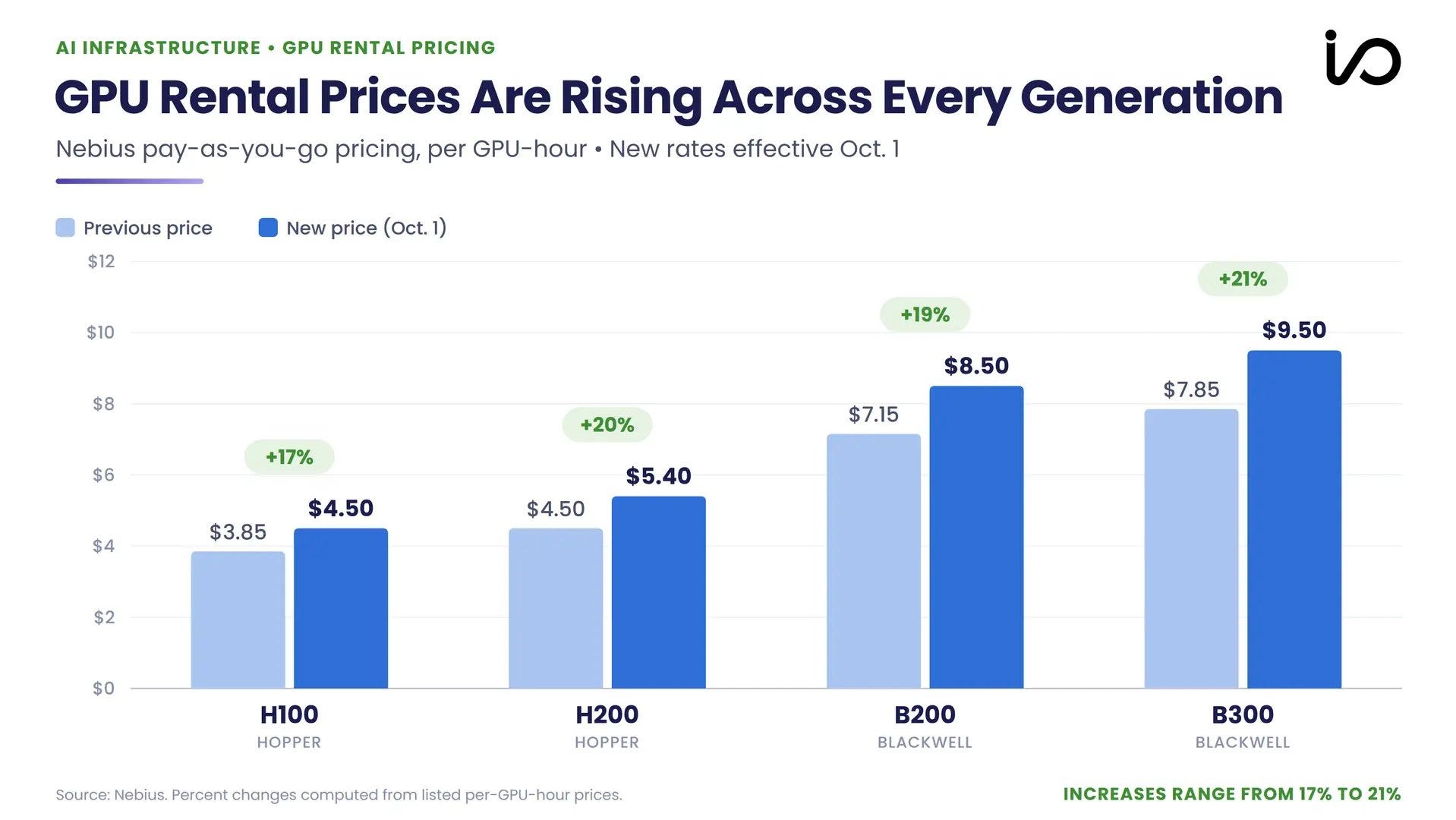
The other sign of a bubble is when we build far more supply than there is demand. If that were the case we’d see idle capacity and suppliers cutting prices to find buyers. If you look at almost any quality AI infrastructure name (LITE, AAOI, MU, SNDK, NVDA, NBIS etc) the complete opposite is happening.
This is not to say we won’t eventually reach a bubble. I expect that’s a 2030-2031 time frame personally. Until that happens, the best thing you can do is to stop predicting doom and focus on companies with insatiable demand for the next 3-5 years.
I share my exact portfolio with all numbers to subscribers. That’s just one of the many parts of the service I offer.
And in the next two weeks I’ll be releasing my new web-app which is a game changer.
Here’s a couple of snips from it:
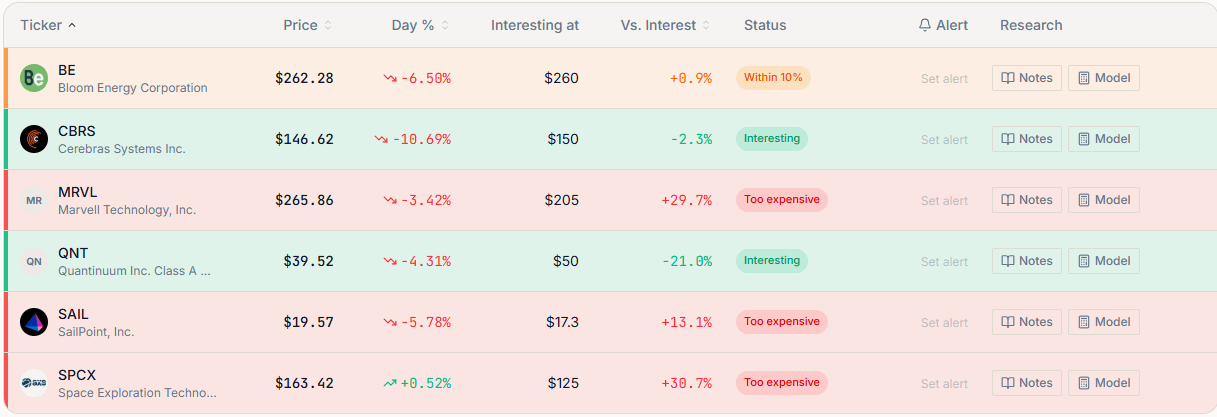
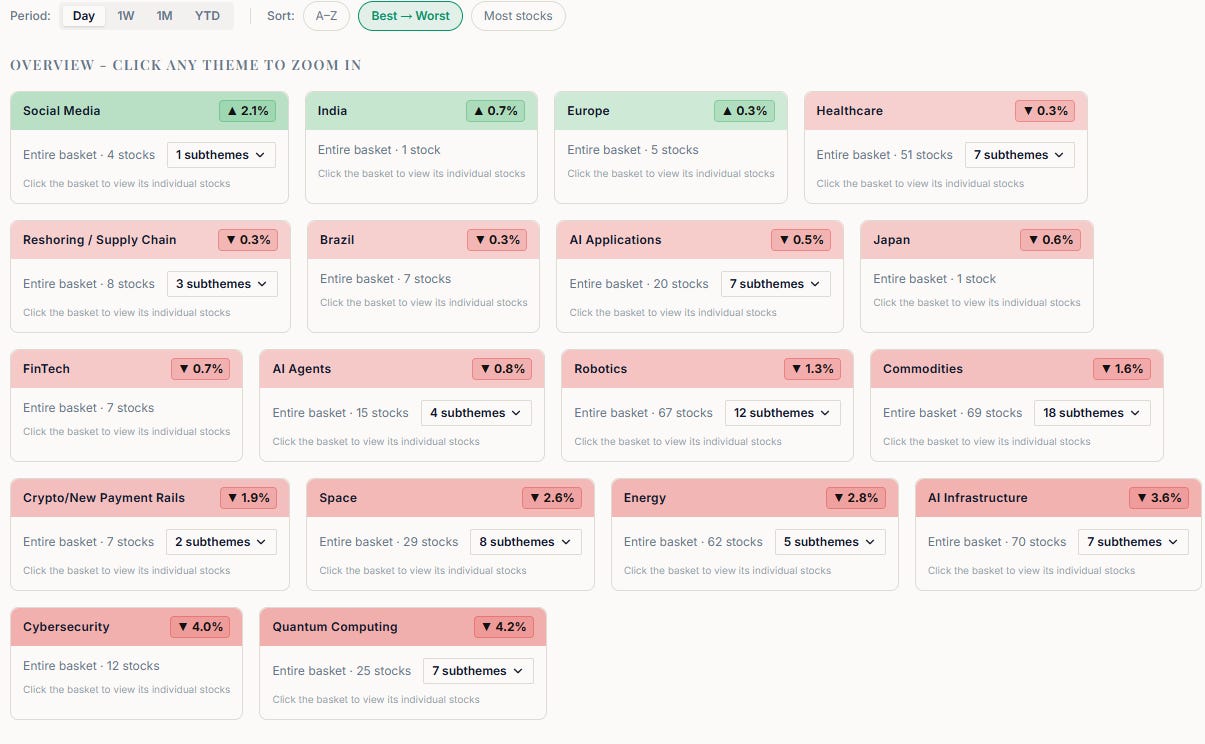
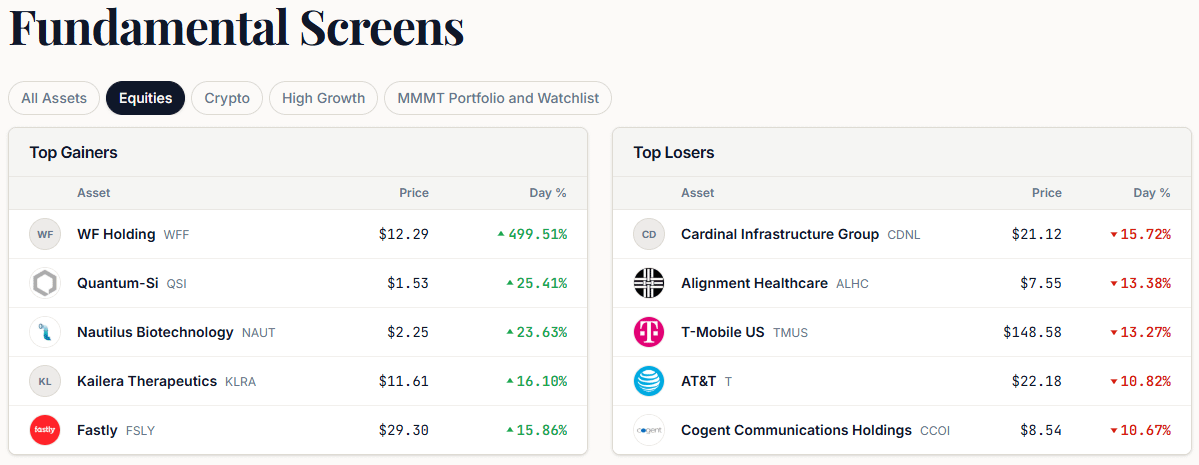
Prices will be kept the same from now until 2 weeks after release. If you subscribe now you’ll forever hold that price.
Macro Update:
The SPY still trades at a 30 year PEG low.
We’re seeing growing profits and compressing multiples…not indicative of a “bubble” in any sense.
12th October 2026 was the lowest SPY volume recorded since 2003.
Housing has broken below 18-month support and mortgage rates just hit 7.5%.
Only 18% of utilities and 12% of autos trade above their 200-D moving average whilst 73% of tech sits above the 200-D moving average.
You can make the argument both ways here. You can make the SPY market breadth argument at all time highs or you can realize that we’re in a new digital led economy (I’m a firm believer that the latter is true here).
Commodities
We remain bullish on gold & silver miners, copper, solar, and scandium.
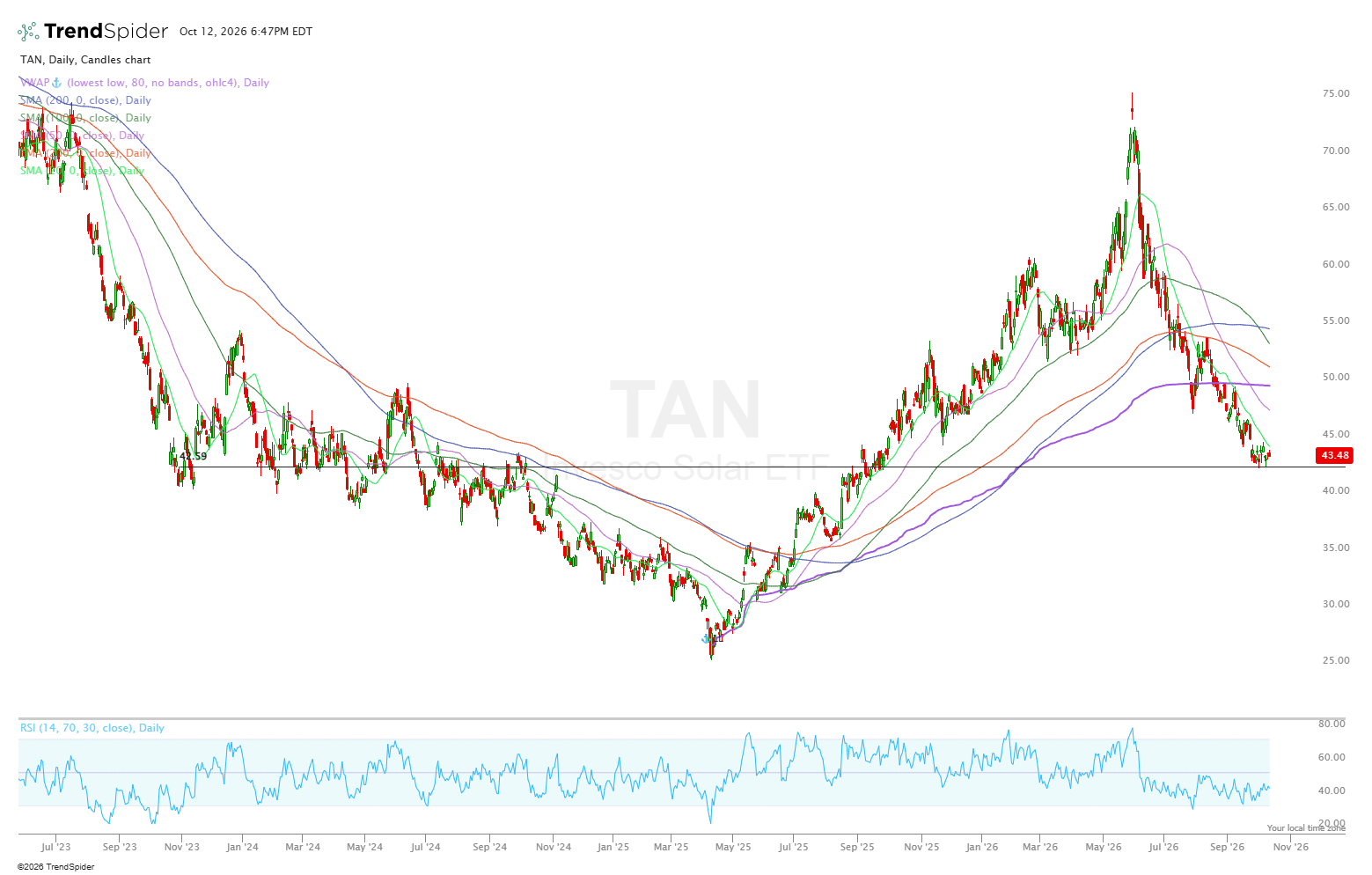
Today’s focus is on solar which is where we’re seeing the most bullish signs at the moment as TAN approaches a key support level:
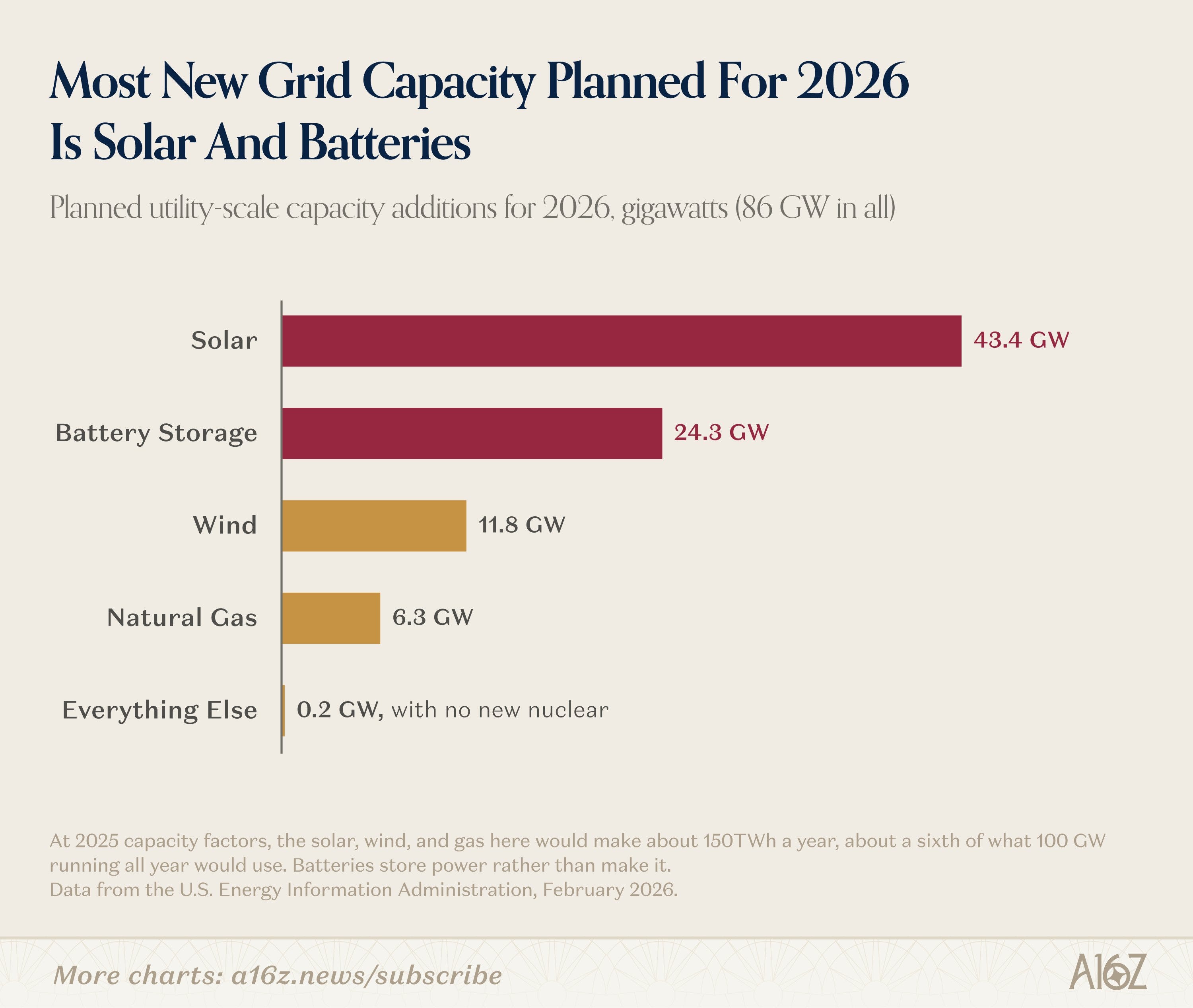
Solar makes up ~51% of planned 2026 capacity additions with battery storage ~28% (total of 67.7 GW vs 6.3 GW for natural gas fired capacity).
India has been the clearest example of this trend so far. In India, solar is now some of the cheapest electricity in the world with contracts being locked in for 25 years. On the other hand, coal is getting more expensive every year as fuel costs rise with inflation so the gap between the two continues to widen.
This cheap power is turning into an industrial advantage in India. For reference, data centers there cost ~30-50% less to build in the US.
All data is leading to solar over the next few years but the more difficult question becomes how to invest in it. We’ll be doing an article on this in the next two weeks.
Currently, I remain long SHLS and TAN.
Crypto
Bitcoin (BTC) continues to hold above the $82,500 support level despite the rising yields, rate hike talks, and every other macro fear.
Unless structure turns bearish again, there’s no reason not to be bullish.
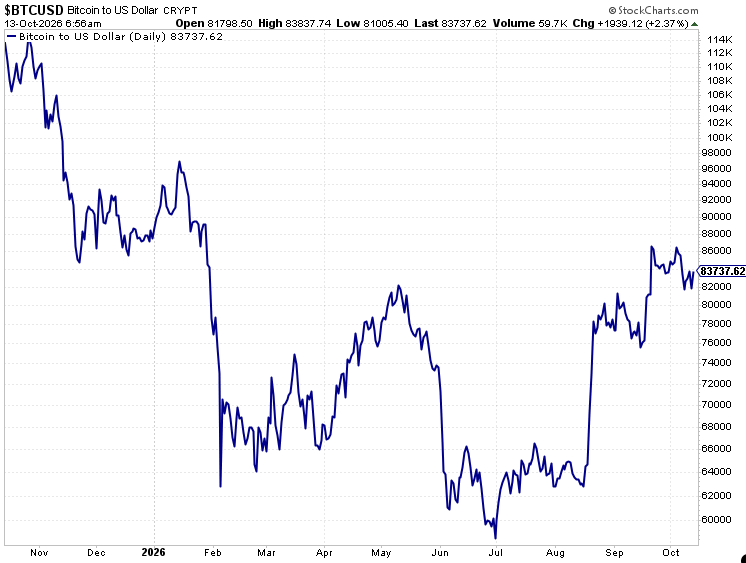
This is a positive sign for higher beta equities as BTC has historically been a proxy for higher beta equities.
The opportunity still remains tokenization and regulation which keep moving faster than people think. In fact, Morgan Stanley just today put out a tokenized asset forecasted market size of $3 - $10 trillion by 2030.
We’ve also recently seen Stripe purchase OpenRouter which is a sign for what’s likely to come. Think about why a payments company would be buying a token routing company. This is the new economy.
Micro Update
Lumentum (LITE) CEO said that the company is completely sold out through to 2029.
Marvell (MRVL) laid out their forecasts to hit $70-90B in revenue by 2031 which shines light on the entire optics trade (COHR, LITE, AAOI, CRDO, FN, etc)

Applied Optoelectronics (AAOI) completed its $600M ATM selling 5.7M shares at an average cost of $105.36.
Coinbase (COIN) reports their Q3 earnings on October 29th with options pricing in ~11% move either way so far.
UBS released their Cerebras (CBRS) model with $23B in revenue in 2030 at 46% operating margins (more on this in the “What’s Mispriced?” section.
Truist estimated AI Cloud ARR will rise from $310B (2025) to $2.1T in 2030 which is a 47% CAGR.
Rosenblatt estimated that Amazon (AMZN) AWS revenue will hit $334B in 2028. That’s just below my $341B estimate but in line with my estimates to hit $1T in ARR by 2035.

What’s Mispriced?
This is a section looking at the potential opportunities I’m seeing at the moment. I’ll split them by how I see the risk profile (high risk → low risk).
I’ll tend to aim for at least 3+ opportunities in every article I publish here…but that depends on what the market is offering.
You’ll also likely see overlap week to week. I am not a trader that changes his mind every few hours, days, or even weeks. If I see an opportunity, that opportunity sometimes stays around for weeks.
Last week we touched on:
NuBank | NU - Top 3 Position
Recursion Pharmaceuticals | RXRX - No position
USA Rare Earths | USAR - Small position
Securitize | SECZ (High Risk)
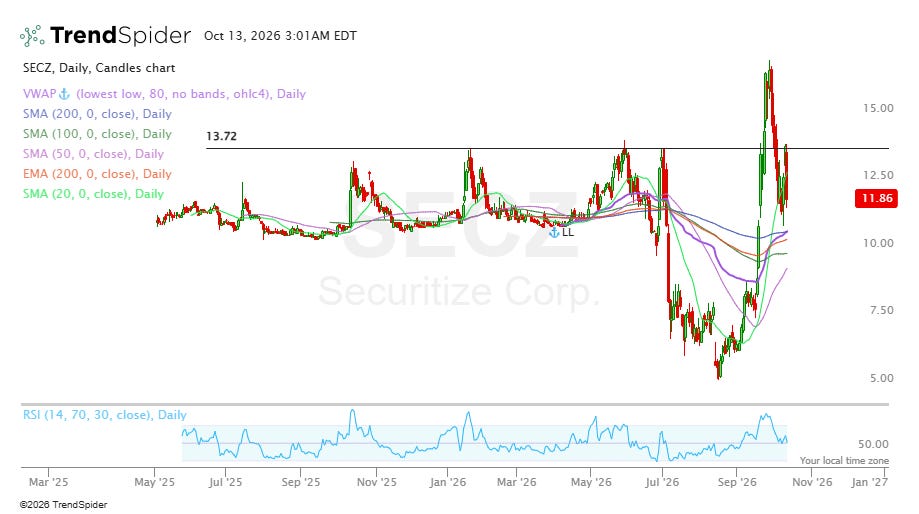
SECZ is a pure play on tokenization with $5B of tokenized AUM and the potential to capture a lot of the economics as long as the incumbents don’t try and compete (so far there’s more signs of incumbents partnering with SECZ rather than competing with them).
SECZ owns a large part of the stack:
Transfer agent: Keeps the official record of who owns each token.
Broker dealer: Lets SECZ buy, sell, and distribute tokenized securities for clients.
Administrator: Handles the back office work.
Valuing SECZ is a little more difficult as we’ve yet to see any longer term forecasts or multiple earnings calls. But at ~$2B MC already off just $71M in FY26 revenue, we’re already seeing the stock trade at a premium.
That premium is because of how embedded SECZ has already become and the potential monetization routes this opens up. The current administration focused business has been a great way to get the business into the right areas of the ecosystem, but that alone wouldn’t be what can revalue SECZ from a $2B company to a +$10B company.
The opportunities are therefore:
Through the Computershare deal, SECZ can start taking a small slice of all US listed equities that become tokenized. Currently, SECZ mostly earns fees from tokenized funds so the greenspace ahead is quite substantial.
The SEC’s innovation exemption allows tokenized stocks to trade around the clock 24/7 so SECZ could earn trading fees in markets that never close. With more hours, global access, and instant settlement against stablecoins…we’ll likely see far more trading volume and therefore more fees.
Through its partnership with Cantor, SECZ can earn fees through tokenized IPOs and follow-on offerings.
