

Nothing has changed for me still from last week and the previous week.
I still firmly bullish AI infrastructure and bullish crypto.

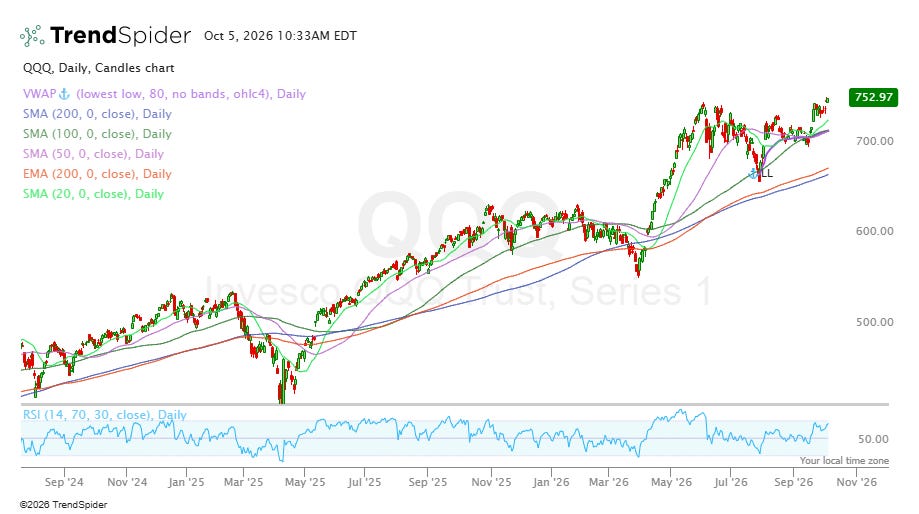
Unfortunately, with the choppy market and the constant doomsday narrative around yields I’ve seen many investors switch to a more bearish narrative even despite the QQQ and SPY sitting above all key MA’s with a bullish structure.
My personal portfolio is now just 1.4% away from its high.
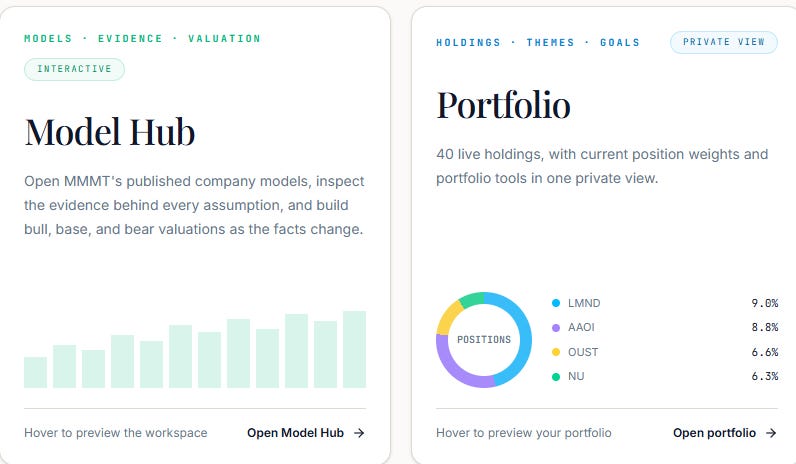
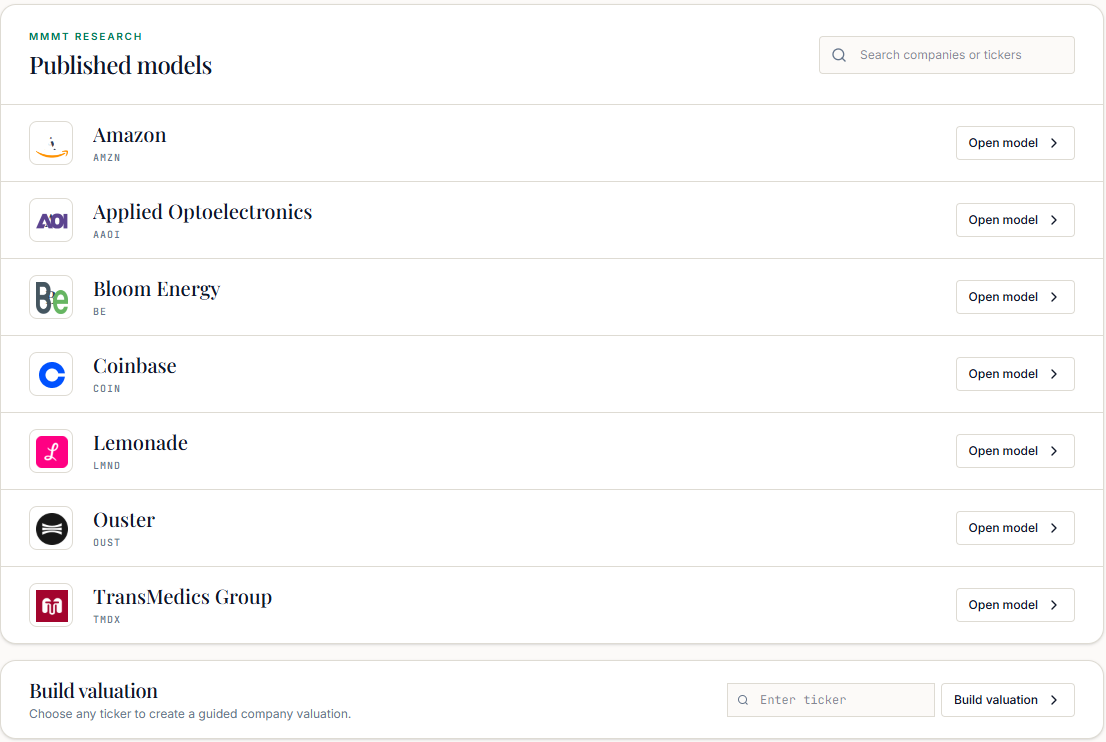
I share my exact portfolio with all numbers to subscribers. That’s just one of the many parts of the service I offer. And in the next two weeks I’ll be releasing my new web-app which is a game changer. Here’s a couple of snips from it:
Right now, there is no sign to be bearish.
As I said last week:
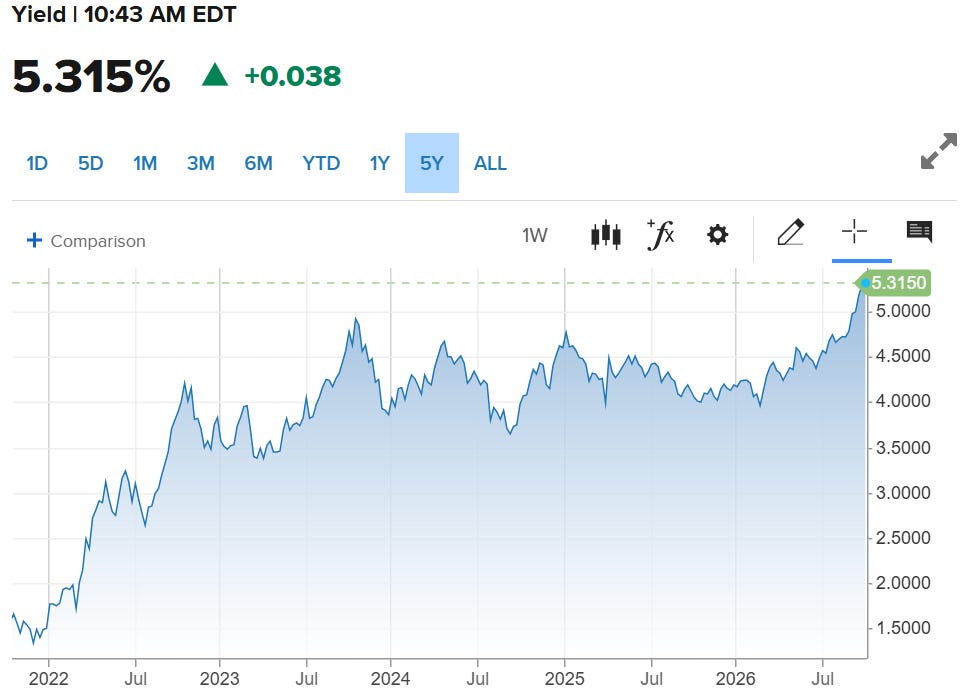
“Investors need to zoom out and realize that this next decade is likely going to be very different from the last three decades…and if that means yields head higher then that could become the reality for a few years.
We’ve been through a period of high yields in the 8-12% range before and the SPY averaged returns ~14% between 1982 and 1995 which is evidence high yields does not necessarily equate to weak market returns.”
The key part to understand isn’t that high yields = bearish stock market returns (like you see scattered all over X for engagement).
Yields rise for different reasons. The popular answer is that yields are climbing because of debt worries or worries about the strength of the dollar. That’s not how I see it at all. If that were happening, we’d see it in credit spreads (reflective of corporate risk) and in the dollar.
Total debt (government + corporate) has not risen relative to the economy. Debt is ~370% of GDP. Debt 20 years ago was ~370% of the economy.
The only difference is that the mix of government vs corporate debt has changed.
Government interest costs are at highs but corporate interest costs are at lows. For the equity market…that matters a lot because companies are far less exposed to higher rates than the headline numbers suggest.
So to make the argument that yields are rising because of debt is a thesis based shallow arguments.
The correct explanation in my opinion is that growth is strong and the bond market is just pricing that in. The Fed is largely following that signal rather than leading it…(as it always does).
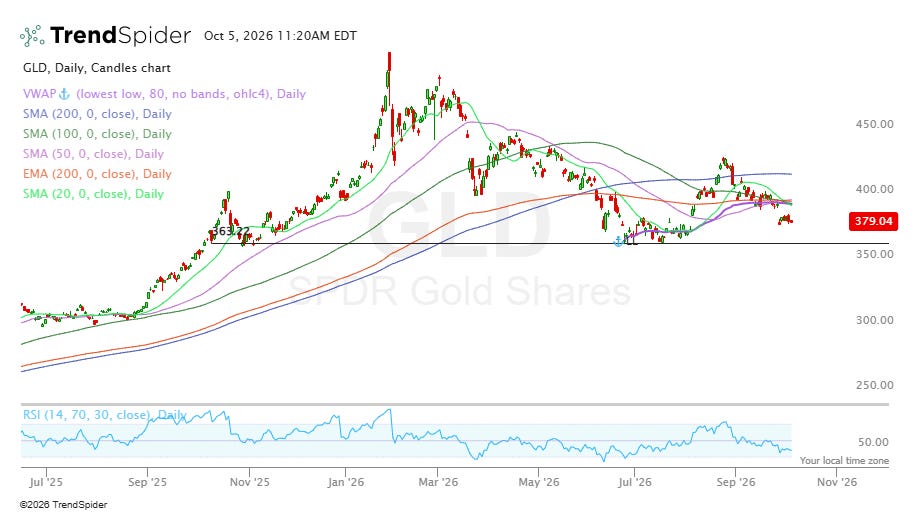
A legitimate counterargument I can vouch for against this would be a consistent trends in softer jobs data (weakness in the economy) and golds resilience (to an extent). Gold is holding up nicely in that we remain in a bullish structure (no break of the $363 level on GLD) but relative to other commodities it’s performed slightly weaker so I’m more on the fence about that argument.
Macro Update
The SPY still trades a 30 year PEG low.
We’re seeing growing profits and compressing multiples…not indicative of a “bubble” in any sense.
Mike Selig (CFTC Chair) officially proposed its first round of rules to regulate the US crypto markets
Hedge Funds and Asset Managers were net buyers of US tech equities in September. This was the only net bought sector in the entire market.
Rental prices for older GPUs have risen from where they were at the start of the year…which is more evidence that cheaper intelligence is raising demand rather than decreasing it…all of which is happening in the early innings of AI (98% of households still aren’t paying for AI).
Flavio Bolsonaro defeated current Brazilian President Lula da Silva in the first round of Brazil’s presidential elections. Final elections are on 25th October. This is a massive net positive for Brazil’s next few years with EWZ rising ~19x from 2002 - 2008 during the last Brazilian bull market. We’re currently sitting at the same level as 2008 highs.
Morgan Stanley forecasted inference spend to outpace training spend with a CAGR of 42% from 2026 - 2030.
Very bullish signs for the obvious NVDA, AMD, and CBRS plays.
Commodities
We remain bullish on gold & silver miners, copper, solar, and scandium over the long term.
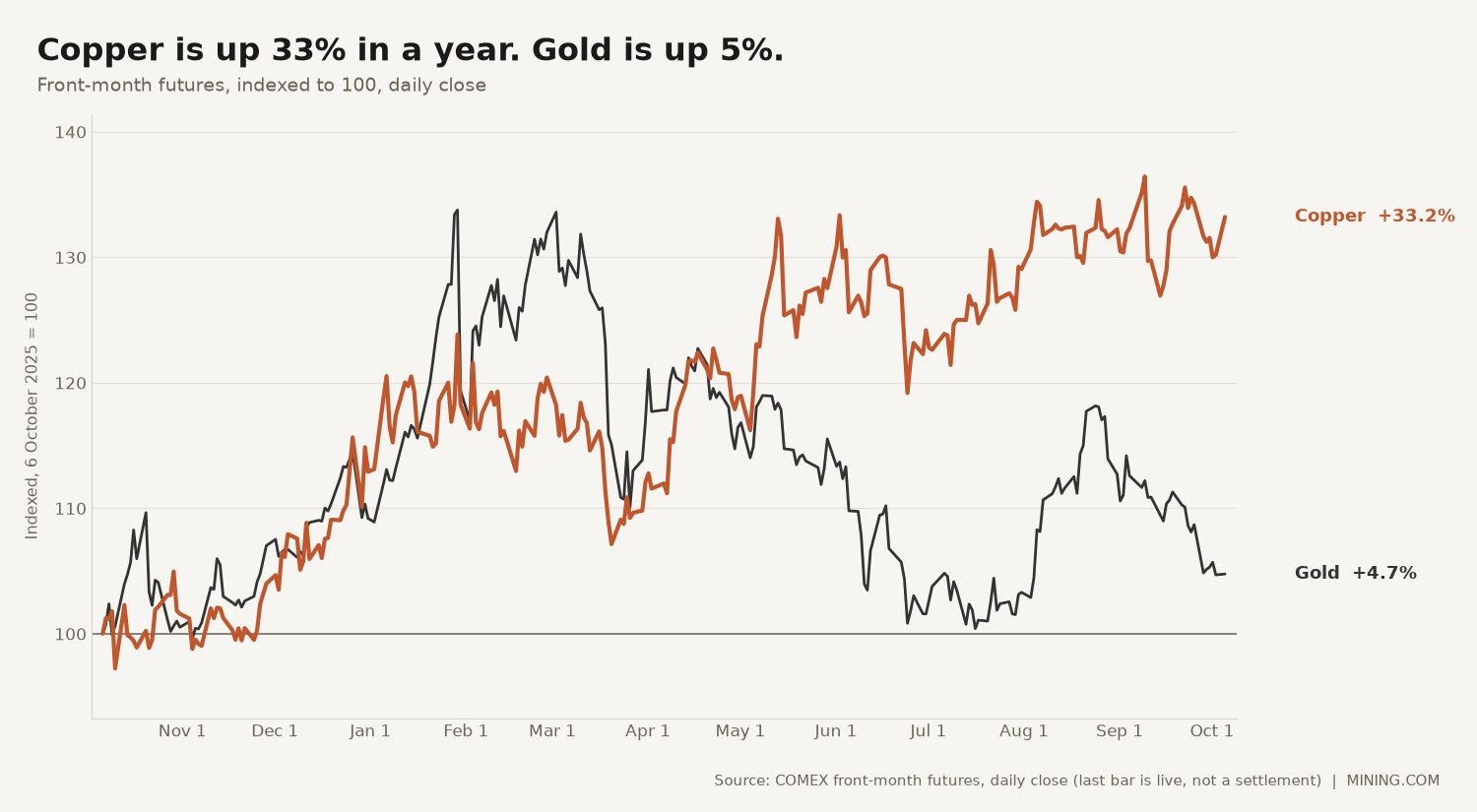
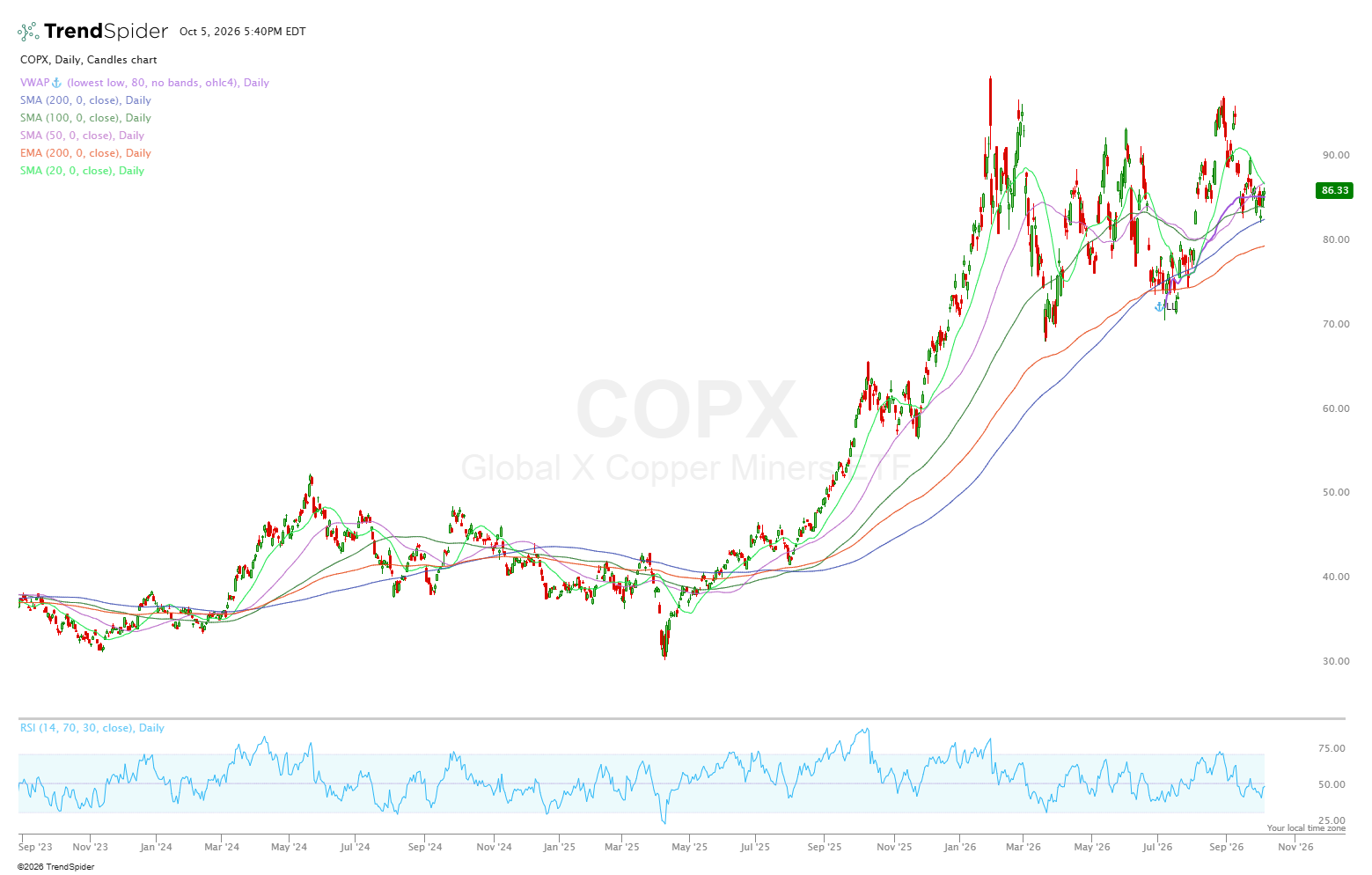
Copper | COPX: I’ve seen no new copper related news throughout the week but I just wanted to reiterate this divergence we’re seeing between copper and gold over the last year. This is copper showing some incredible relative strength in a short-term commodity bear market.
As we touched on last week, Deutsche Bank are forecasting a $22,050 per ton copper price by Q2 2027 with their analysts calling it the more acutely scarce copper market since the 1980s.
You don’t have to overcomplicate it.
Own the safe way to play the theme: COPX
And own a higher risk way to play the theme (if you have a higher risk tolerance): TMQ
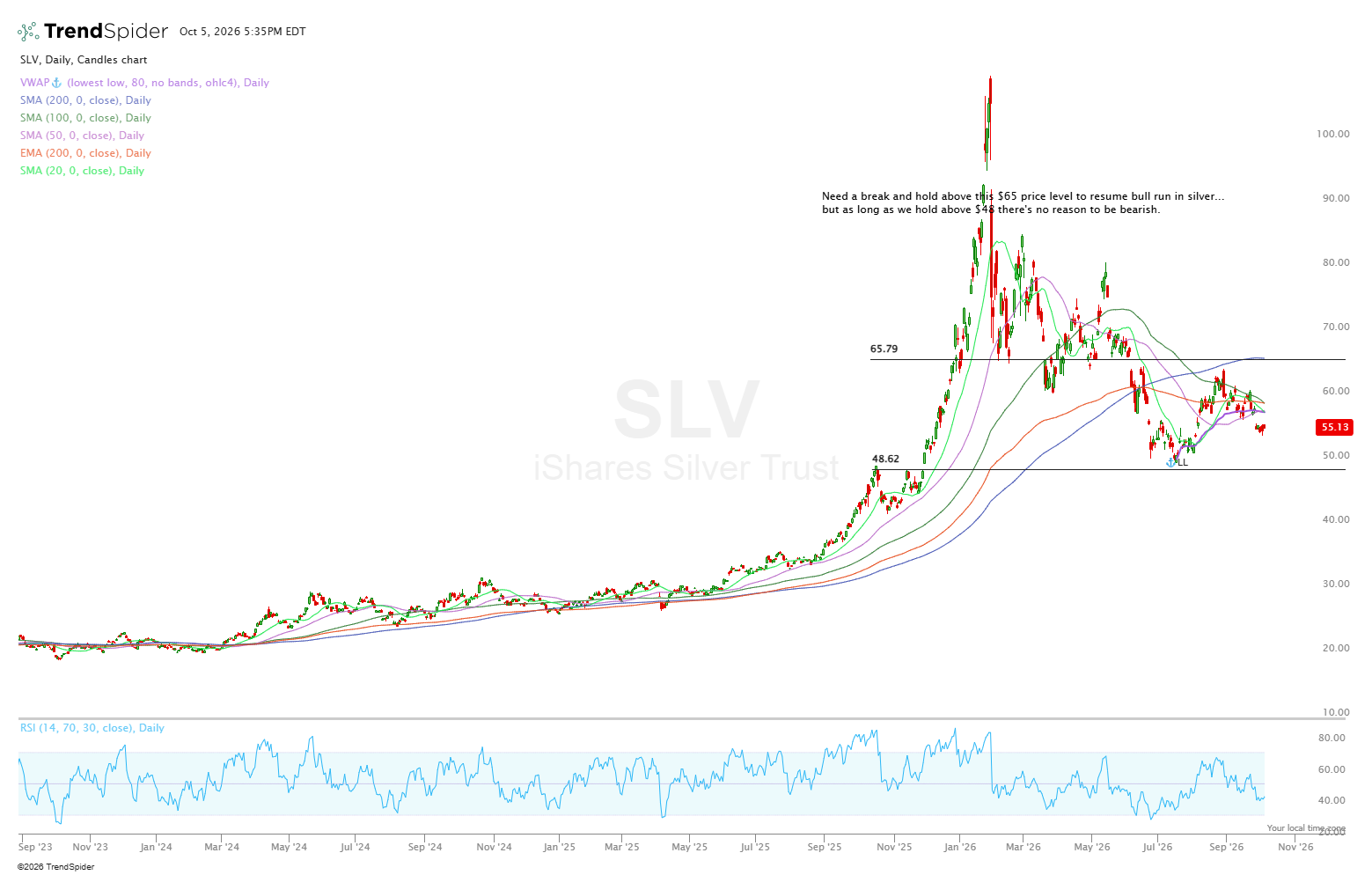
Silver | SLV: SLV continues to hold its ground in this range between $48 and $65. Until we see a clear break below July’s lows, I remain bullish on silver.
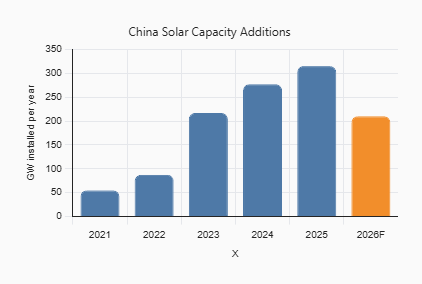
For balance, one piece of data I am tracking quite closely at the moment is solar installations. This is not the main bull case for owning silver stocks for me, but solar is a key demand driver and a reduction here could lead to some weaker sentiment for silver.
Crypto
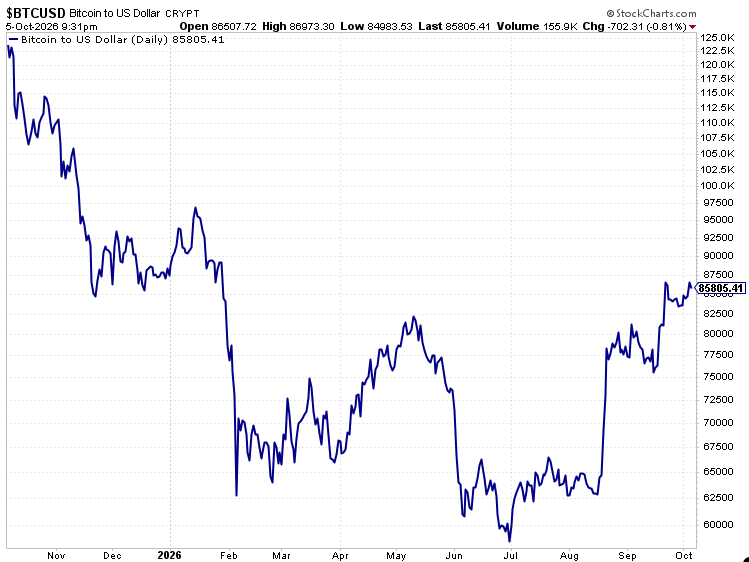
Bitcoin (BTC) continues to hold up nicely above this $82,500 support level we’re seeing.
As I noted last week, this “risk on” asset is continuing to hold despite the bears arguing about rising yields, rate hikes, and all other macro fears.
Bitcoin remains a leading indicator for higher beta equities and until we see a break of support here, we remain bullish crypto and bullish equities.
Micro Update
Applied Optoelectronics (AAOI) completed its $600M ATM offering. Perhaps, now this is out the way the focus will revert back to scaling capacity and FY27/FY28 forecasts.
Goldman Sachs is forecasting hyperscalers (AMZN, GOOGL, META, MSFT, ORCL) will be a combined $510 billion by 2030.
Micron (MU) reported earnings last week where management reiterated that supply will stay tight until at least 2028.
Lumentum (LITE) CEO said that they estimate to be under-shipping demand by 70% in 2027.
Cathie Wood bought $20 million worth of Cerebras (CBRS) last week.
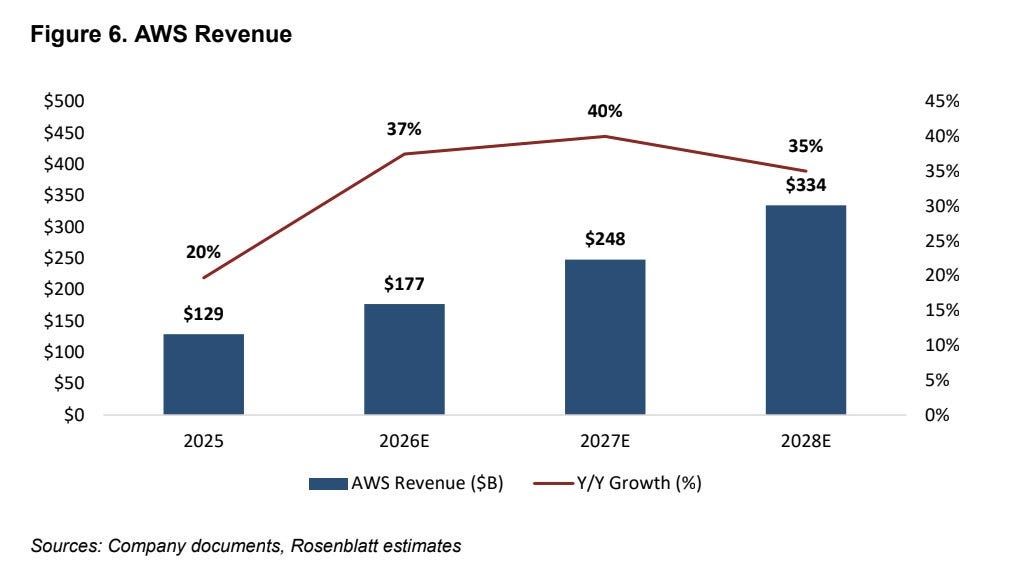
Rosenblatt estimated that Amazon (AMZN) AWS revenue will hit $334 billion in 2028. That’s just below my $341 billion estimate but is in line with my estimates to hit $1 trillion in ARR by 2035.
What’s Mispriced?
This is a section looking at the potential opportunities I’m seeing at the moment. I’ll split them by how I see the risk profile (high risk → low risk).
I’ll tend to aim for at least 3+ opportunities in every article I publish here…but that depends on what the market is offering.
You’ll also likely see overlap week to week. I am not a trader that changes his mind every few hours, days, or even weeks. If I see an opportunity, that opportunity sometimes stays around for weeks.
Last week I touched on:
Coinbase | COIN and my 2031 price target
Bloom Energy | BE and my recent buy
Contango Silver & Gold | CTGO
NuBank | NU (Lower Risk)
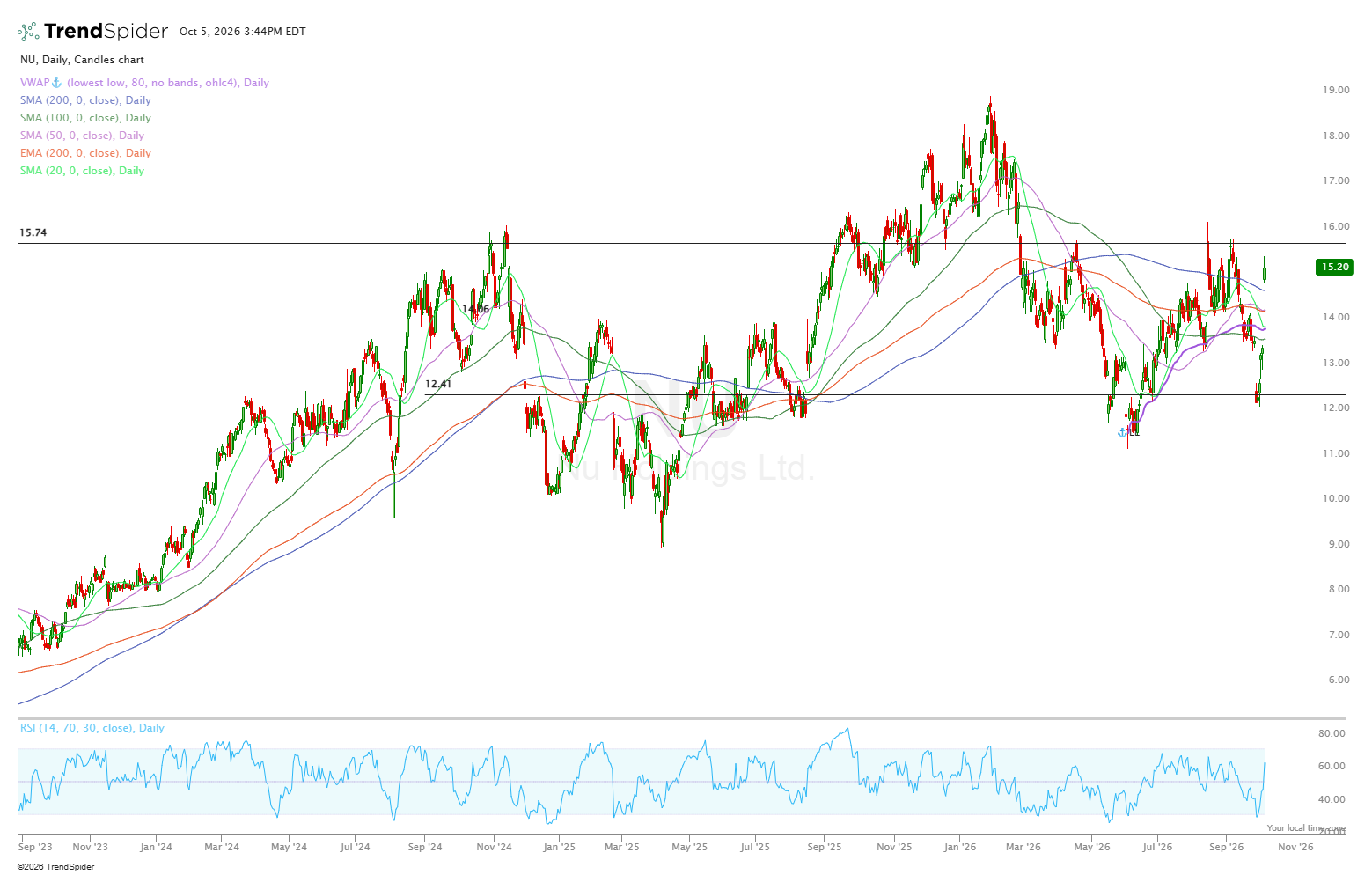
Here’s a more detailed look at the numbers for NU and also why I see NU being a big beneficiary of a potential Bolsonaro presidency:
Cost of credit: Cost of credit was $1.7B against $3.7B of net interest income. If Bolsonaro does win, Bloomberg estimates we’ll see 10-year yields cut ~70 basis points. This will ease debt and increase repayment rates which currently has the biggest effect on NU’s earnings.
Commodity boom: Brazil will mainly benefit from a commodity boom which should increase cash flow for producers, suppliers, employees, and the wider Brazilian economy. This is only a net positive for the banking industry.
Currency conversion: NU has suffered in the past a lot from FX conversions as they report in dollars. If we see the Brazilian Real rise ~3% (as estimated by Bloomberg) then we’ll see an increase in the dollar value of the same earnings.
Small business: Lower long-term yields cut borrowing costs for smaller firms. This is an area NU is starting to monetize now so cheaper capital is a net positive for NU.
Current forecasts for NU are $1.13 in EPS in FY27 and $1.46 in FY28. Personally I think this is conservative but I want to work from these numbers at the moment given management haven’t been too vocal on forward guidance…perhaps because of the macro.
$1.46 in EPS in FY28 would be a 31.4% CAGR over 3 years which is less than SOFI at 43.8%…but not materially that different given the difference in multiple.
Right now, most fintechs aren’t trading anywhere near 1x PEG but I suspect we get there over time in a more bullish macro environment. I also think it’s fair to use that as a multiple given I’m remaining fairly conservative on EPS numbers.
$1.46 * 31.4x EPS (3 year CAGR for 1x PEG) gives us a $45.8 stock (or 3x from today).
